
Landing pages remain one of the most effective tools for converting website visitors into leads and customers. Whether you're running Google Ads, Facebook campaigns, email marketing, or product launches, a well-designed landing page can significantly improve conversion rates.
Among the many landing page builders available today, Leadpages and Unbounce are two of the most recognized platforms. Both offer drag-and-drop editors, professionally designed templates, AI-powered features, A/B testing, and integrations with popular marketing tools. However, they are built for slightly different audiences and marketing goals.
Leadpages is widely known for its simplicity, affordability, and lead generation capabilities, making it popular among small businesses, entrepreneurs, and content creators. Unbounce, on the other hand, is designed for marketers who require advanced optimization tools, AI-driven traffic routing, and greater flexibility for large-scale advertising campaigns.
In this comparison, we'll examine their features, pricing, performance, ease of use, and ideal use cases to help you decide which platform best fits your business.
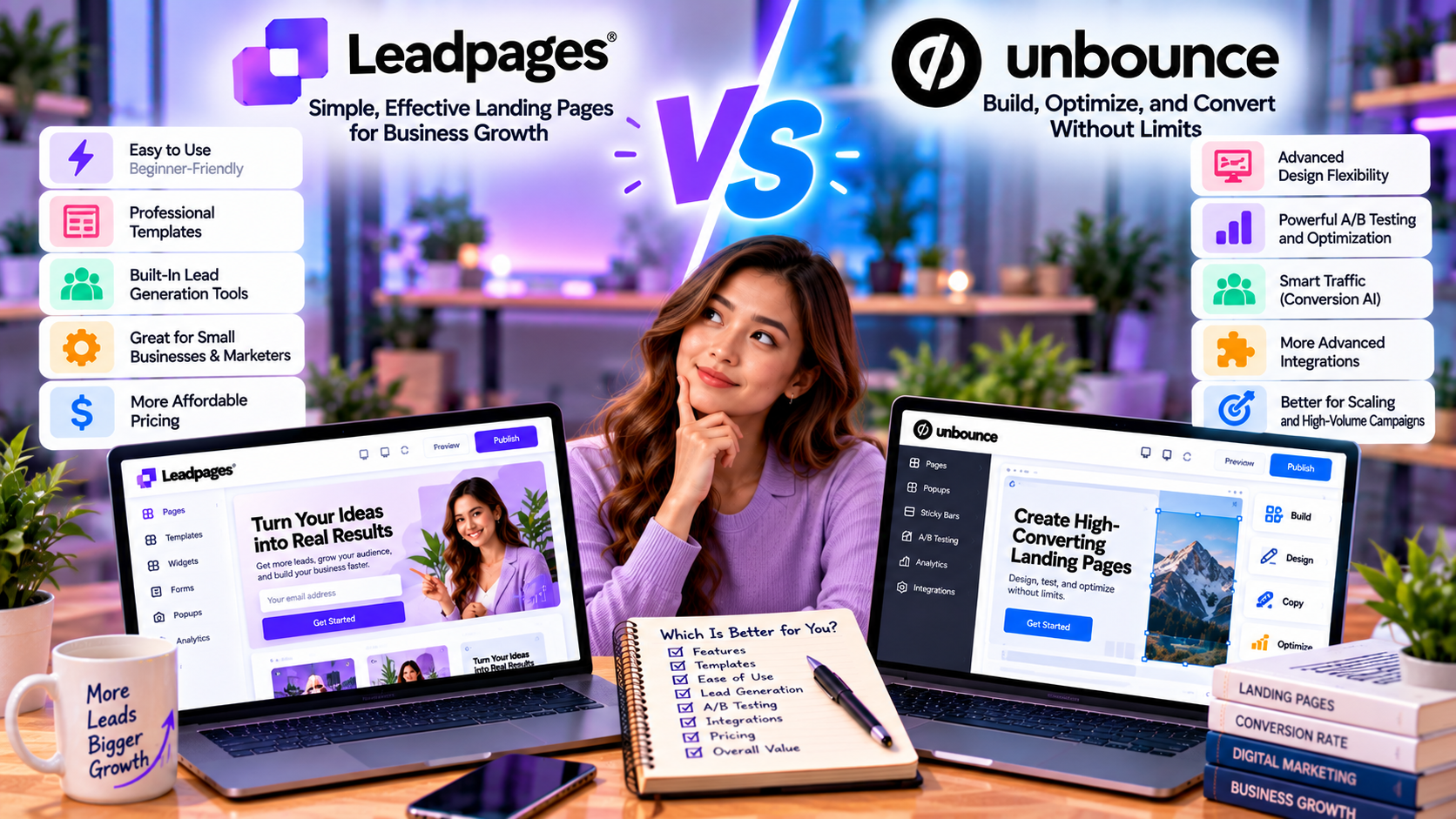
Quick Comparison
| Feature | Leadpages | Unbounce |
|---|---|---|
| Ease of Use | ⭐⭐⭐⭐⭐ | ⭐⭐⭐⭐☆ |
| Landing Page Builder | Excellent | Excellent |
| AI Features | Good | Excellent |
| A/B Testing | Yes | Yes |
| Smart Traffic | No | Yes |
| Templates | 250+ | 100+ |
| Pop-ups & Alert Bars | Yes | Yes |
| Integrations | 90+ | 100+ |
| Best For | SMBs, Solopreneurs | Agencies, PPC Teams |
| Pricing | More Affordable | Premium |
Overview
What is Leadpages?
Leadpages is a no-code landing page builder focused on helping businesses generate leads, grow email lists, and increase conversions.
Key strengths include:
- Drag-and-drop page builder
- AI-powered page creation
- Landing page templates
- Pop-ups
- Alert bars
- Lead capture forms
- Built-in conversion tools
- Affordable pricing
It is particularly popular among:
- Small businesses
- Coaches
- Consultants
- SaaS startups
- Bloggers
- Ecommerce brands
What is Unbounce?
Unbounce is a conversion optimization platform designed primarily for digital marketers running paid advertising campaigns.
Beyond landing pages, it includes advanced optimization tools such as:
- Smart Traffic
- AI Copy Assistant
- Dynamic Text Replacement
- Advanced A/B testing
- Conversion analytics
- Popups
- Sticky bars
Unbounce is widely used by:
- Marketing agencies
- PPC specialists
- Enterprise marketing teams
- High-budget advertisers
Landing Page Builder
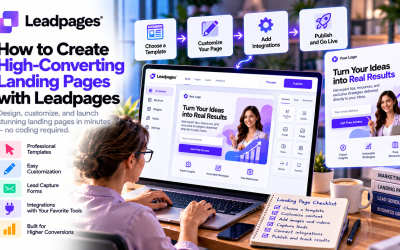
Both platforms provide intuitive drag-and-drop editors.
Leadpages
Advantages:
- Extremely beginner-friendly
- Faster learning curve
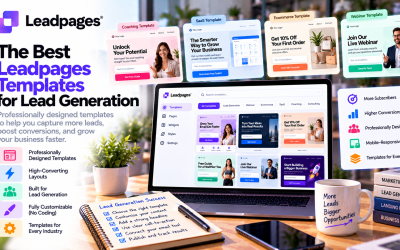
- Hundreds of conversion-focused templates
- Easy customization
- AI page generation
Ideal for users without design experience.
Unbounce
Advantages:
- Greater design flexibility
- Pixel-level editing
- More advanced page customization
- Better suited for experienced marketers
However, the editor is slightly more complex than Leadpages.
Winner: Leadpages for beginners, Unbounce for advanced designers.
AI Features
Artificial intelligence is becoming increasingly important for landing page optimization.
Leadpages
Offers AI-powered page creation that helps users generate landing pages quickly based on campaign goals.
Useful for:
- Faster page creation
- Content suggestions
- Design assistance
Unbounce
Includes several AI-powered tools, including:
- Smart Traffic
- AI Copy Assistant
- Conversion optimization
Smart Traffic automatically sends visitors to the landing page variant most likely to convert based on visitor behavior.
This feature can significantly improve advertising performance.
Winner: Unbounce
Templates
Templates reduce development time while improving conversion rates.
Leadpages
Provides more than 250 professionally designed templates covering:
- SaaS
- Coaching
- Ecommerce
- Lead magnets
- Webinars
- Consulting
- Product launches
Templates are easy to customize.
Unbounce
Offers fewer templates but provides greater creative flexibility.
Many templates are designed specifically for paid advertising campaigns.
Winner: Leadpages
Conversion Optimization
Both platforms prioritize conversions but approach optimization differently.
Leadpages
Includes:
- Lead capture forms
- Pop-ups
- Alert bars
- A/B testing
- Analytics
Simple yet effective for most businesses.
Unbounce
Adds advanced optimization features such as:
- Smart Traffic
- Dynamic Text Replacement
- AI optimization
- Advanced experimentation
These capabilities make Unbounce especially attractive for businesses managing high-volume paid traffic.
Winner: Unbounce
Integrations
Both platforms integrate with major marketing software.
Supported integrations include:
- HubSpot
- Mailchimp
- ActiveCampaign
- Salesforce
- Zapier
- Stripe
- Google Analytics
- Facebook Pixel
Neither platform has a significant advantage here.
Winner: Tie
Ease of Use
Leadpages
Designed for non-technical users.
Most users can publish their first landing page within an hour.
Ideal for:
- Beginners
- Entrepreneurs
- Small teams
Unbounce
More powerful but requires additional learning.
Best suited for experienced marketers familiar with conversion optimization.
Winner: Leadpages
Pricing
Pricing is an important consideration, especially for small businesses.
Leadpages
Generally offers:
- Lower monthly pricing
- Better value for startups
- Affordable scaling
Unbounce
Higher pricing reflects its advanced AI capabilities and optimization tools.
It is often a better fit for businesses with larger advertising budgets.
Winner: Leadpages
Performance
Both platforms deliver:
- Reliable hosting
- Fast page loading
- Mobile responsiveness
- Secure infrastructure
However, Unbounce's Smart Traffic and optimization engine may improve conversions for businesses running significant paid advertising campaigns.
Winner: Slight advantage to Unbounce
Pros and Cons
Leadpages
Pros
- Beginner-friendly interface
- Affordable pricing
- Excellent template library
- AI page creation
- Built-in pop-ups
- Fast setup
- Strong lead generation tools
Cons
- Fewer advanced optimization tools
- Less design flexibility
- No Smart Traffic feature
Unbounce
Pros
- Smart Traffic AI
- Dynamic Text Replacement
- Advanced optimization
- Powerful A/B testing
- Flexible page editor
- Excellent for PPC campaigns
Cons
- Higher pricing
- Steeper learning curve
- Better suited to experienced marketers
Which Platform Should You Choose?
Choose Leadpages if:
- You're a small business.
- You're launching your first landing pages.
- You need an affordable solution.
- You want to grow your email list.
- You create webinars, lead magnets, or consultation pages.
- You prefer simplicity over advanced customization.
Choose Unbounce if:
- You manage high-budget advertising campaigns.
- You rely heavily on Google Ads or PPC.
- You need AI-powered traffic optimization.
- You want advanced experimentation tools.
- You work in a marketing agency.
- You require maximum control over landing page design.
Real-World Use Cases
SaaS Startups
Leadpages offers a quick way to launch free trial pages and capture leads without a dedicated design team.
Ecommerce Brands
Unbounce helps optimize paid advertising campaigns with Smart Traffic and Dynamic Text Replacement.
Marketing Agencies
Unbounce provides advanced optimization capabilities for managing multiple client campaigns.
Coaches and Consultants
Leadpages simplifies consultation booking, lead generation, and email list building.
Content Creators
Leadpages is an excellent choice for growing newsletters, promoting digital products, and distributing lead magnets.
Final Verdict
Both Leadpages and Unbounce are outstanding landing page builders, but they serve different audiences.
Leadpages excels in simplicity, affordability, and ease of use. Its intuitive drag-and-drop editor, extensive template library, AI-powered page creation, and built-in lead generation tools make it an ideal solution for entrepreneurs, small businesses, coaches, consultants, SaaS startups, and marketers who want to launch high-converting landing pages quickly without a steep learning curve.
Unbounce, meanwhile, is built for performance-driven marketers. Advanced features such as Smart Traffic, Dynamic Text Replacement, AI optimization, and greater design flexibility make it particularly well-suited for agencies and businesses investing heavily in paid advertising. While its pricing is higher, the additional optimization capabilities can deliver significant value for large-scale campaigns.
If you're looking for the best overall value and ease of use, Leadpages is the stronger choice for most small and medium-sized businesses. However, if advanced conversion optimization and AI-powered traffic management are your top priorities, Unbounce remains one of the most powerful landing page platforms available in 2026.

Write Your Review
No reviews yet. Be the first to share your experience!