
If you're looking to generate more leads or increase online sales, you've likely come across Leadpages and ClickFunnels. Both are popular no-code marketing platforms that help businesses create landing pages and optimize conversions. However, despite some overlapping features, they serve very different purposes.
Leadpages is designed primarily as a landing page and lead generation platform. It focuses on helping businesses create high-converting landing pages, pop-ups, alert bars, and lead capture forms quickly and affordably.
ClickFunnels takes a broader approach. Instead of focusing only on landing pages, it enables businesses to build complete sales funnels, including opt-in pages, checkout pages, upsells, downsells, email automation, memberships, and customer journeys.
Choosing the right platform depends on your business model, marketing strategy, and long-term growth goals. In this guide, we'll compare Leadpages and ClickFunnels across features, pricing, ease of use, sales capabilities, integrations, and ideal use cases.
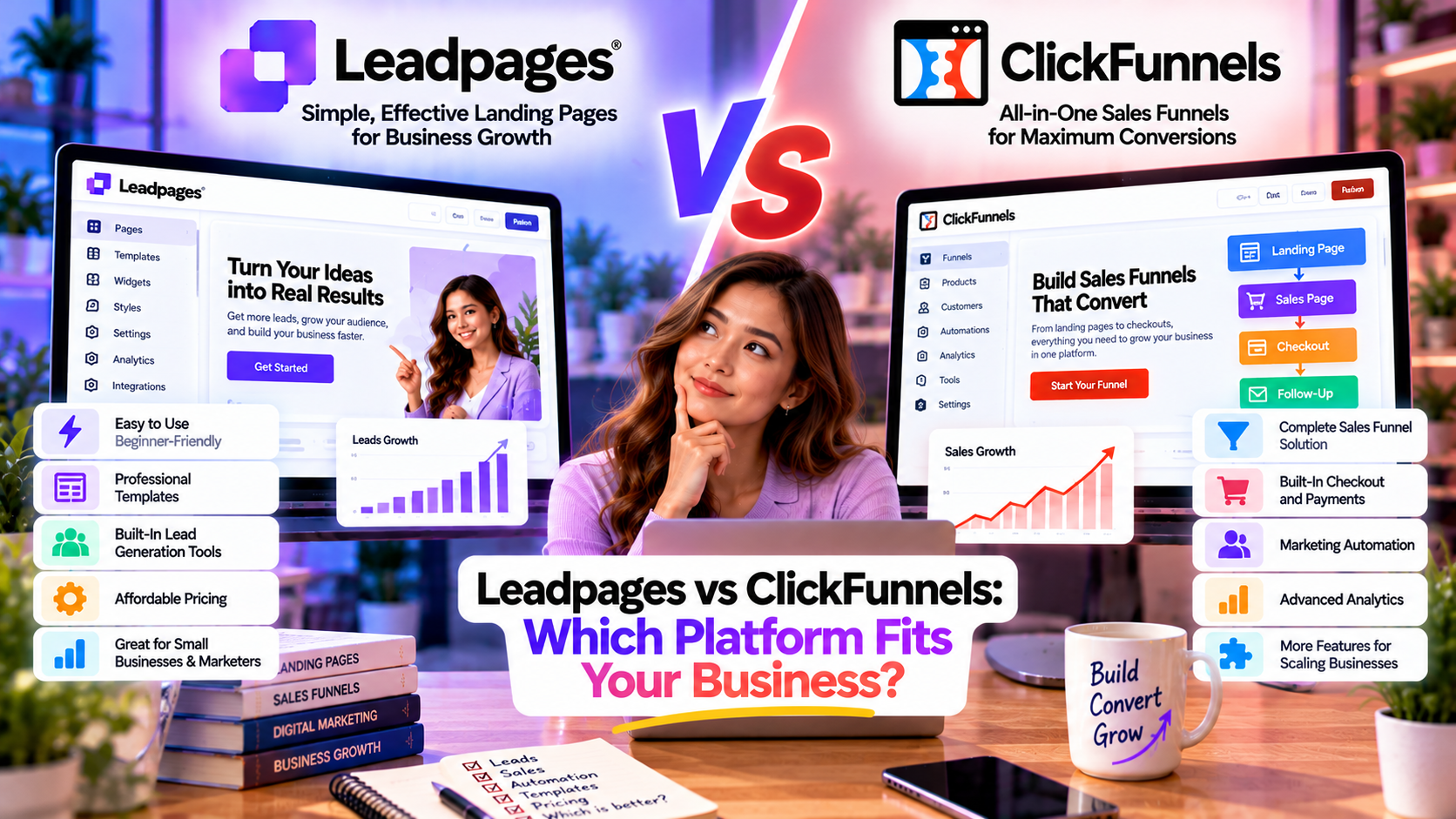
Quick Comparison
| Feature | Leadpages | ClickFunnels |
|---|---|---|
| Primary Purpose | Landing Pages | Sales Funnels |
| Ease of Use | ⭐⭐⭐⭐⭐ | ⭐⭐⭐⭐☆ |
| Landing Page Builder | Excellent | Excellent |
| Funnel Builder | Basic | Excellent |
| AI Features | Good | Very Good |
| Templates | 250+ | 200+ |
| Email Marketing | Integrations | Built-in |
| Checkout Pages | Limited | Yes |
| Membership Sites | No | Yes |
| Pricing | More Affordable | Higher |
| Best For | Lead Generation | Selling Products |
Platform Overview
What is Leadpages?
Leadpages is a cloud-based landing page builder created to help businesses capture leads and improve marketing campaign performance.
Core features include:
- Drag-and-drop page builder
- AI-powered page generation
- Landing page templates
- Pop-ups
- Alert bars
- Lead capture forms
- A/B testing
- Analytics
- CRM integrations
It is especially popular among:
- Small businesses
- Coaches
- Consultants
- SaaS startups
- Bloggers
- Agencies
What is ClickFunnels?
ClickFunnels is an all-in-one sales funnel platform designed to guide visitors from awareness to purchase.
Its ecosystem includes:
- Funnel builder
- Landing pages
- Sales pages
- Checkout pages
- Order bumps
- One-click upsells
- Membership sites
- Email automation
- CRM features
- Affiliate management (on higher plans)
ClickFunnels is commonly used by:
- Course creators
- Ecommerce businesses
- Digital marketers
- Coaches
- Online educators
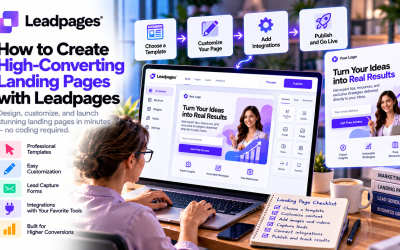
Landing Page Builder
Both platforms provide drag-and-drop editors.
Leadpages
Strengths include:
- Fast setup
- Beginner-friendly interface
- Conversion-focused templates
- Clean design
- AI-assisted creation
Ideal for businesses focused on lead generation.
ClickFunnels
Also includes a visual page editor.
Advantages:
- Funnel-specific templates
- Sales page optimization
- Checkout integration
- Flexible funnel layouts
However, some users find the editor less intuitive than Leadpages.
Winner: Leadpages
Sales Funnels
This is where ClickFunnels clearly differentiates itself.
Leadpages
Supports:
- Landing pages
- Lead capture
- Pop-ups
- Simple customer journeys
It is not designed to build complex multi-step funnels.
ClickFunnels
Allows businesses to create complete funnels, including:
- Lead generation
- Product sales
- Webinar funnels
- Membership funnels
- Upsell sequences
- Downsell offers
- Subscription sales
Everything is managed from one platform.
Winner: ClickFunnels
AI Features
Leadpages
Provides AI-powered assistance for:
- Landing page generation
- Content suggestions
- Faster campaign creation
ClickFunnels
Offers AI features that assist with:
- Funnel creation
- Sales copy
- Marketing content
- Workflow optimization
Its AI capabilities are more closely integrated into the overall sales process.
Winner: Slight advantage to ClickFunnels
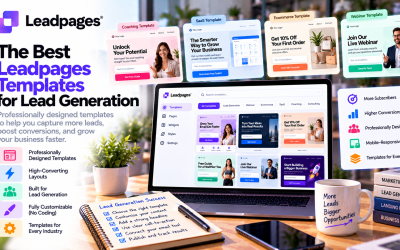
Templates
Leadpages
Offers over 250 professionally designed templates focused on:
- Lead generation
- SaaS
- Consulting
- Webinars
- Ecommerce
- Local businesses
Templates emphasize simplicity and high conversions.
ClickFunnels
Provides templates for:
- Sales funnels
- Product launches
- Membership sites
- Webinar funnels
- Ecommerce
- Coaching programs
These templates are optimized for complete customer journeys rather than standalone pages.
Winner: Tie (depends on your goals)
Email Marketing
Leadpages
Relies on integrations with platforms such as:
- Mailchimp
- ActiveCampaign
- ConvertKit
- HubSpot
- Constant Contact
Businesses can continue using their preferred email platform.
ClickFunnels
Includes native email marketing automation within the platform.
Users can:
- Build sequences
- Automate follow-ups
- Segment audiences
- Trigger campaigns
This reduces reliance on third-party software.
Winner: ClickFunnels
Ecommerce Features
Leadpages
Can connect with payment processors and ecommerce tools but focuses primarily on lead generation.
ClickFunnels
Built specifically for selling products.
Features include:
- Checkout pages
- Order bumps
- Upsells
- Downsells
- Subscription payments
- Digital product delivery
For online sales, ClickFunnels provides a much more complete solution.
Winner: ClickFunnels
Integrations
Both platforms integrate with leading business software.
Supported tools include:
- HubSpot
- Salesforce
- Zapier
- Stripe
- Mailchimp
- Google Analytics
- Facebook Pixel
Leadpages often allows businesses to keep using their existing marketing stack without replacing core tools.
Winner: Tie
Ease of Use
Leadpages
One of the easiest landing page builders available.
Most users can publish pages quickly with minimal training.
ClickFunnels
Although user-friendly, it includes more features, settings, and workflows.
Learning the complete platform requires additional time.
Winner: Leadpages
Pricing
Pricing varies significantly.
Leadpages
Advantages include:
- Lower monthly subscription
- Excellent value
- Affordable for startups
- Lower total marketing costs
ClickFunnels
Higher pricing reflects its broader functionality.
Businesses replacing multiple marketing tools may find the investment worthwhile.
Winner: Leadpages
Pros and Cons
Leadpages
Pros
- Affordable pricing
- Beginner-friendly
- Excellent landing page builder
- Large template library
- AI page creation
- Fast publishing
- Strong lead generation tools
Cons
- Limited funnel functionality
- No membership platform
- Requires external email marketing software
ClickFunnels
Pros
- Complete sales funnel platform
- Built-in email marketing
- Checkout pages
- Membership sites
- Upsells and downsells
- Sales automation
- Digital product delivery
Cons
- Higher pricing
- Steeper learning curve
- More features than some businesses require
Which Platform Should You Choose?
Choose Leadpages if:
- Your goal is lead generation.
- You primarily need landing pages.
- You're a startup or small business.
- You want affordable pricing.
- You already use a CRM and email platform.
- Simplicity is important.
Choose ClickFunnels if:
- You sell digital products.
- You offer online courses.
- You need checkout pages.
- You build multi-step sales funnels.
- You want built-in marketing automation.
- You prefer an all-in-one sales platform.
Real-World Use Cases
SaaS Companies
Leadpages is ideal for capturing demo requests, free trial registrations, and newsletter sign-ups while integrating with existing CRM systems.
Course Creators
ClickFunnels provides complete enrollment funnels with payment processing, upsells, and membership access.
Ecommerce Businesses
ClickFunnels supports product launches, promotions, and post-purchase upsells, making it well-suited for increasing average order value.
Marketing Agencies
Leadpages allows agencies to quickly build landing pages for multiple clients while integrating with each client's preferred marketing tools.
Coaches and Consultants
Both platforms are effective. Leadpages excels at consultation booking and lead generation, while ClickFunnels is better for selling coaching programs and premium offers.
Final Verdict
Although Leadpages and ClickFunnels are often compared, they solve different marketing challenges.
Leadpages is a specialized landing page platform that excels at generating leads quickly and efficiently. Its intuitive interface, affordable pricing, AI-powered page creation, extensive template library, and seamless integrations make it an excellent choice for entrepreneurs, consultants, SaaS companies, agencies, and small businesses that want to create high-converting landing pages without unnecessary complexity.
ClickFunnels, by contrast, is a comprehensive sales funnel platform. It combines landing pages with checkout pages, email marketing, membership sites, upsells, downsells, and sales automation into a single ecosystem. Businesses that sell online courses, digital products, subscriptions, or high-ticket offers will benefit from its end-to-end funnel capabilities, even though the platform comes with a higher price tag and a steeper learning curve.
If your primary objective is capturing leads and launching marketing campaigns quickly, Leadpages offers the best balance of simplicity, performance, and value. If your business depends on building complete sales funnels and maximizing online sales, ClickFunnels is the more powerful long-term solution.

Write Your Review
No reviews yet. Be the first to share your experience!