
Artificial intelligence has become a standard part of the modern workplace. Over the past few years, AI chatbots have helped millions of users write emails, generate content, answer questions, and brainstorm ideas. While these capabilities remain valuable, businesses are beginning to realize that conversational AI alone isn't enough.
Today's organizations need AI that can do more than generate text—they need AI that can take action.
This shift has led to the rise of AI agents, intelligent digital teammates capable of completing multi-step business tasks, integrating with business software, and automating entire workflows. Lindy.ai is one of the leading platforms driving this transformation.
In this article, we'll explore why businesses are moving from traditional AI chatbots to Lindy.ai AI agents and how this new approach is reshaping workplace productivity.
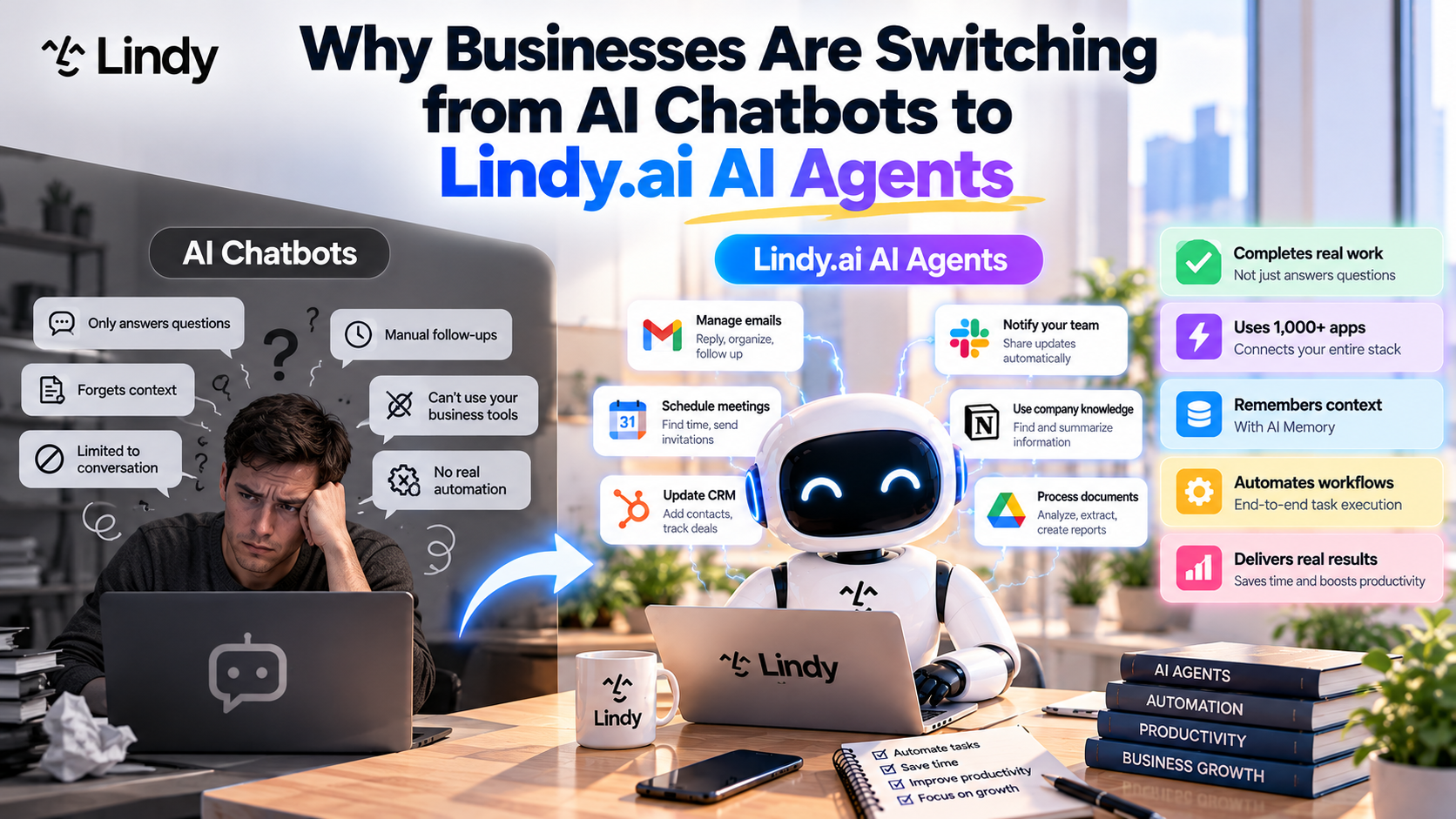
Table of Contents
- The Evolution of Business AI
- The Limitations of Traditional AI Chatbots
- What Makes Lindy.ai Different?
- Why Businesses Are Switching
- Real-World Business Examples
- AI Chatbots vs AI Agents
- Is Lindy.ai Right for Your Business?
- Final Verdict
- Frequently Asked Questions
The Evolution of Business AI
The first wave of AI tools focused primarily on conversation.
Users could ask questions such as:
- Write an email
- Summarize an article
- Translate text
- Explain a concept
- Generate marketing content
These tools dramatically improved productivity but still required users to manually perform most of the work afterward.
For example:
A chatbot can write a sales email.
But you still need to:
- Copy the text
- Open Gmail
- Find the recipient
- Personalize the message
- Send the email
- Update your CRM
- Schedule a follow-up
The AI assists with one task, while the user completes the rest.
Businesses are now looking for AI that handles the entire process.
The Limitations of Traditional AI Chatbots
Although AI chatbots are excellent for generating content, they have several limitations in business environments.
They Primarily Generate Text
Most chatbots focus on answering questions or creating content.
They rarely complete tasks automatically.
Limited Integration
Many chatbots operate within their own interface.
They often require users to manually transfer information between applications.
No Workflow Automation
Traditional chatbots usually don't:
- Update CRM systems
- Schedule meetings
- Notify teams
- Create tasks
- Manage workflows
Every action still depends on the user.
Minimal Long-Term Memory
Many AI assistants start each conversation with limited context.
Users frequently repeat instructions or provide the same business information multiple times.
Human-Driven Execution
Even after receiving an excellent AI-generated response, employees remain responsible for carrying out the work.
This limits the overall productivity gains.
What Makes Lindy.ai Different?
Lindy.ai is built around AI agents, not just AI conversations.
Instead of waiting for prompts, AI agents can work autonomously and perform complete business workflows.
Rather than asking:
“How should I respond to this customer?”
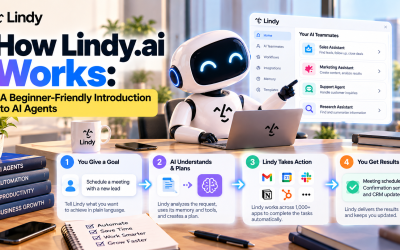
Businesses can simply instruct Lindy.ai to:
- Analyze the message
- Draft a personalized response
- Send the email
- Update the CRM
- Notify the account manager
- Schedule a follow-up
The AI handles the entire workflow from beginning to end.
Five Reasons Businesses Are Switching to Lindy.ai
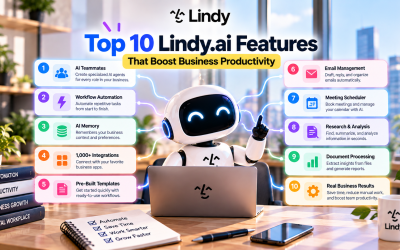
1. AI That Completes Work Instead of Assisting
The biggest reason companies adopt Lindy.ai is simple:
It performs work instead of only suggesting what to do.
Examples include:
- Sending emails
- Updating CRM records
- Scheduling meetings
- Creating reports
- Organizing documents
- Managing workflows
Employees spend less time on repetitive administrative tasks and more time on strategic work.
2. Intelligent Workflow Automation
Traditional automation platforms rely on predefined rules.
Lindy.ai combines automation with AI reasoning.
This means workflows can adapt based on context.
For example, if a customer email expresses urgency, the AI agent can prioritize the request, notify the appropriate team member, and draft a tailored response—all without human intervention.
This flexibility makes automation significantly more powerful.
3. Deep Software Integrations
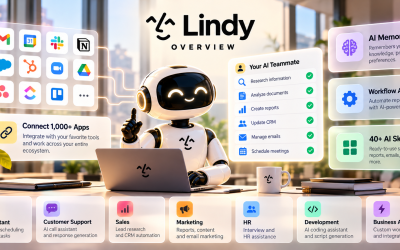
Lindy.ai integrates with more than 1,000 applications, including:
- Gmail
- Google Calendar
- Slack
- Notion
- HubSpot
- Salesforce
- Zoom
- Google Drive
- Airtable
- ClickUp
- GitHub
- monday.com
- Stripe
Instead of switching between applications, employees can rely on AI agents to coordinate work across their existing software ecosystem.
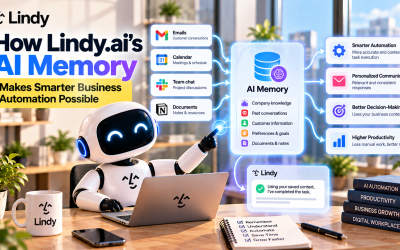
4. Persistent AI Memory
Unlike many chatbots that require repeated prompting, Lindy.ai remembers:
- Company information
- Internal documentation
- Customer preferences
- Previous workflows
- Team instructions
- Business processes
Persistent memory helps AI provide more accurate and consistent assistance over time.
5. Better Scalability
As businesses grow, repetitive work grows as well.
Hiring additional employees isn't always the most efficient solution.
Lindy.ai allows organizations to scale routine operations without dramatically increasing administrative overhead.
AI agents can work around the clock, helping teams maintain productivity even as workloads increase.
Real-World Business Examples
Sales Teams
Instead of manually managing leads, AI agents can:
- Qualify prospects
- Update CRM records
- Schedule meetings
- Draft follow-up emails
- Summarize sales calls
Sales professionals spend more time building relationships and closing deals.
Marketing Teams
Marketing departments use Lindy.ai to:
- Generate campaign reports
- Organize research
- Draft content
- Coordinate projects
- Summarize performance metrics
Routine reporting becomes largely automated.
Customer Support
AI agents help support teams by:
- Classifying customer inquiries
- Drafting responses
- Retrieving knowledge base articles
- Escalating urgent cases
- Summarizing support conversations
This improves response times and consistency.
Human Resources
HR professionals automate:
- Interview scheduling
- Candidate communication
- Employee onboarding
- Internal documentation
- Recruitment workflows
Administrative work is reduced while improving the candidate experience.
AI Chatbots vs Lindy.ai AI Agents
| Feature | Traditional AI Chatbot | Lindy.ai AI Agent |
|---|---|---|
| Generates content | ✅ | ✅ |
| Answers questions | ✅ | ✅ |
| Executes workflows | ❌ | ✅ |
| Updates CRM | ❌ | ✅ |
| Sends emails | Limited | ✅ |
| Schedules meetings | Limited | ✅ |
| Connects multiple applications | Limited | ✅ |
| Persistent memory | Limited | ✅ |
| Multi-step automation | ❌ | ✅ |
The comparison highlights a key trend: businesses are shifting from AI that assists to AI that acts.
Is Lindy.ai Right for Your Business?
Lindy.ai is an excellent choice if your organization:
- Manages repetitive administrative work
- Uses multiple business applications
- Relies on CRM systems
- Handles frequent customer communication
- Coordinates meetings regularly
- Generates recurring reports
- Wants to improve operational efficiency
However, if your primary need is simply generating text or brainstorming ideas, a traditional AI chatbot may already meet your requirements.
For businesses seeking end-to-end automation, Lindy.ai provides a much broader solution.
Final Verdict
The workplace is entering a new era of artificial intelligence. While AI chatbots introduced organizations to the power of conversational AI, AI agents are taking the next step by performing real work.
Lindy.ai exemplifies this evolution by combining intelligent decision-making, workflow automation, persistent memory, and extensive software integrations into a single platform.
Rather than replacing employees, Lindy.ai empowers them by eliminating repetitive tasks, improving collaboration, and allowing teams to focus on strategic initiatives that create greater business value.
For organizations looking to modernize operations and embrace AI-driven productivity, Lindy.ai represents one of the most promising AI agent platforms available in 2026.
Write Your Review
No reviews yet. Be the first to share your experience!