
Artificial Intelligence is transforming software development at an unprecedented pace. Modern AI coding assistants can generate functions, write unit tests, refactor legacy code, explain complex algorithms, and even build entire applications from simple prompts.
This has sparked an important question:
Will AI replace software engineers?
The answer is more nuanced than many headlines suggest.
AI is becoming exceptionally good at writing code. But building successful software has never been just about writing code—it is about creating business value.
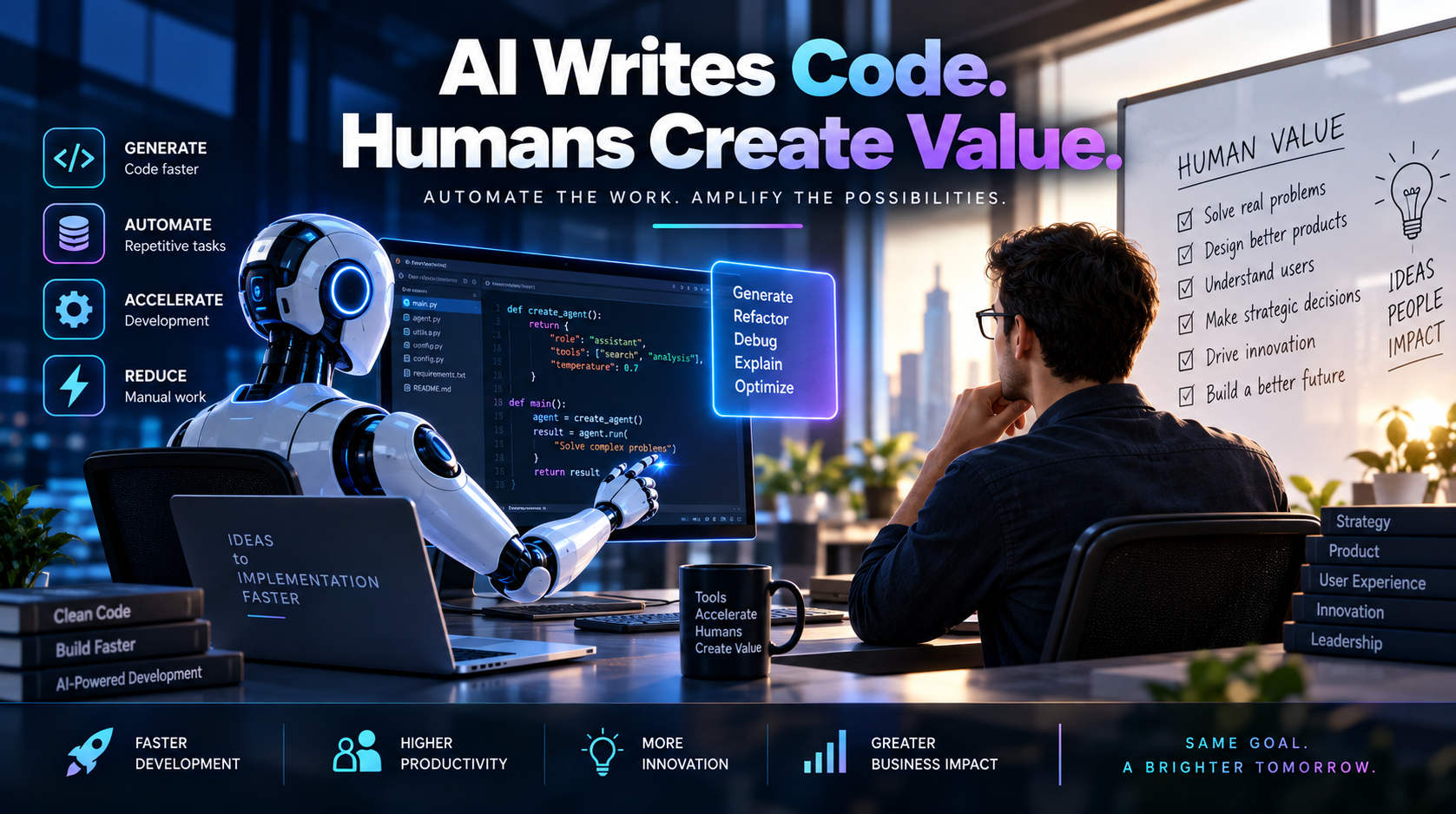
Coding Is Only One Part of Software Development
Writing code is only one step in a much larger process.
Successful software projects require:
- Understanding business problems
- Gathering requirements
- Designing user experiences
- Making architectural decisions
- Managing trade-offs
- Ensuring security and compliance
- Collaborating with stakeholders
- Delivering measurable business outcomes
AI can accelerate many technical tasks, but it cannot fully replace the human judgment required to balance business goals, technical constraints, and organizational priorities.
AI Excels at Execution
Today's AI coding assistants can:
- Generate boilerplate code
- Explain unfamiliar frameworks
- Create API integrations
- Write SQL queries
- Generate documentation
- Produce unit tests
- Refactor repetitive code
- Detect common bugs
These capabilities significantly increase developer productivity by automating repetitive work.
In many cases, AI acts as an intelligent pair programmer that never gets tired.
Humans Excel at Context
Software exists to solve business problems—not simply to produce source code.
Humans contribute capabilities that AI cannot fully replicate, including:
- Understanding customer needs
- Defining product strategy
- Prioritizing features
- Evaluating business risks
- Making ethical decisions
- Negotiating trade-offs
- Leading engineering teams
- Driving innovation
These activities require context, experience, communication, and judgment.
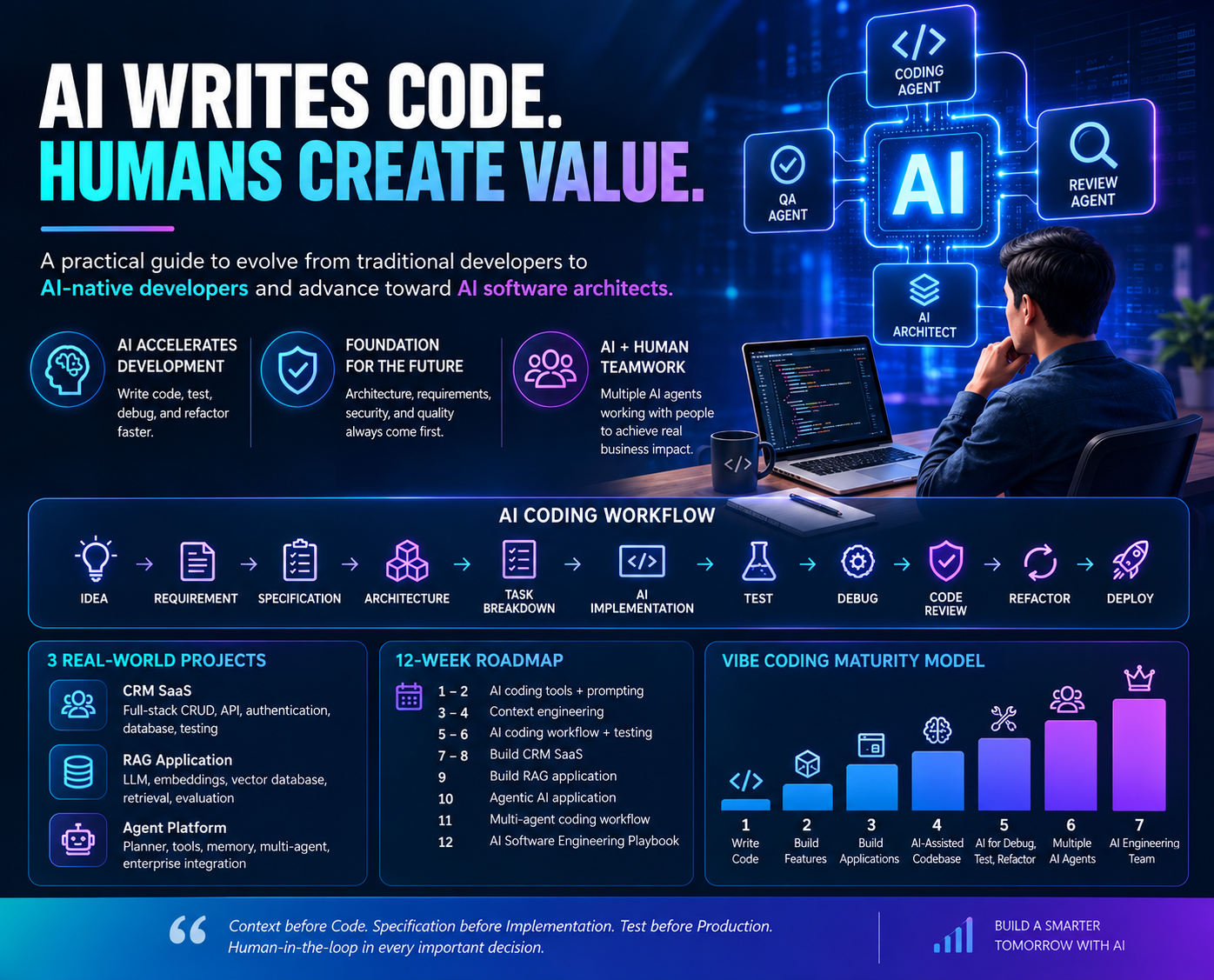
From Code Writers to Solution Architects
As AI takes over routine coding tasks, the role of software engineers is evolving.
Tomorrow's developers will spend less time writing repetitive code and more time:
- Designing systems
- Building AI-powered workflows
- Defining business logic
- Creating reusable platforms
- Integrating enterprise systems
- Ensuring governance and security
- Optimizing user experiences
In other words, developers become architects of intelligent systems rather than producers of individual lines of code.
The New Competitive Advantage
The competitive advantage is no longer:
Who writes code the fastest?
It becomes:
- Who understands the business best?
- Who designs better systems?
- Who builds better products?
- Who creates better customer experiences?
- Who delivers measurable business outcomes?
AI accelerates software development, but humans determine what is worth building.
The Rise of AI-Augmented Engineering
The future is not AI replacing developers.
It is AI-augmented engineering.
Developers who effectively leverage AI will:
- Deliver software faster.
- Improve code quality.
- Reduce repetitive work.
- Focus on innovation.
- Solve more complex business problems.
Those who combine technical expertise with business understanding will create the greatest value.
Conclusion
AI is fundamentally changing how software is built, but it is not changing why software is built.
Code is becoming increasingly automated.
Business value is not.
The most successful engineers in the AI era will not be those who write the most code—they will be those who best understand customers, design intelligent solutions, and transform technology into measurable business outcomes.
AI writes code. Humans create value.


Write Your Review
No reviews yet. Be the first to share your experience!