
As organizations adopt Agentic AI, conversations about cost often focus on one number:
“How much does each LLM API call cost?”
While model pricing is important, it represents only a fraction of the total cost of running an enterprise AI platform.
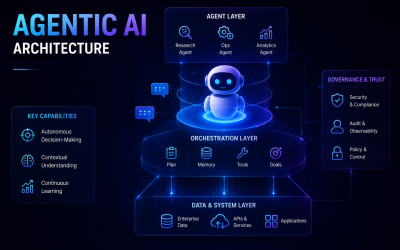
A single Agentic AI request may involve multiple AI agents, several model invocations, retrieval systems, external APIs, databases, security checks, orchestration engines, and human approvals.
The real cost of inference extends far beyond the price per token.
To optimize AI spending effectively, enterprises must understand where inference costs actually come from.
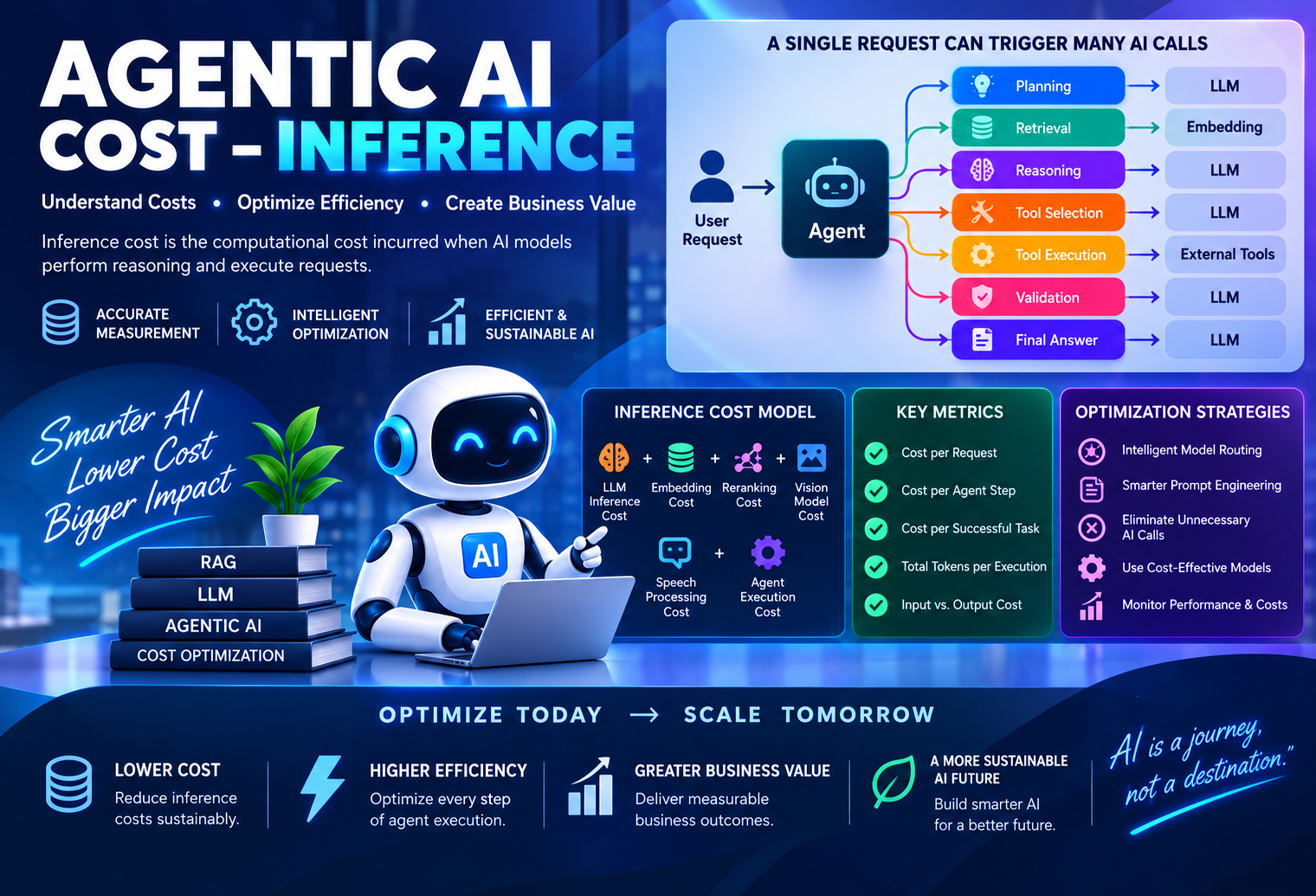
What Is Inference Cost?
Inference cost refers to the total cost of executing an AI request from the moment it is received until the final response is delivered.
For a traditional chatbot, inference may involve:
User

   │

LLM

   │

Response
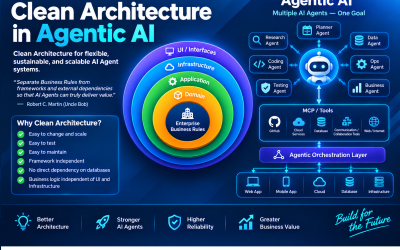
In an Agentic AI platform, however, the workflow is much more complex:
User

   │

Planner Agent

   │

Retriever

   │

Memory

   │

LLM

   │

Tool Calls

   │

Validation

   │

Report Agent

   │

Response
Each step contributes to the total inference cost.
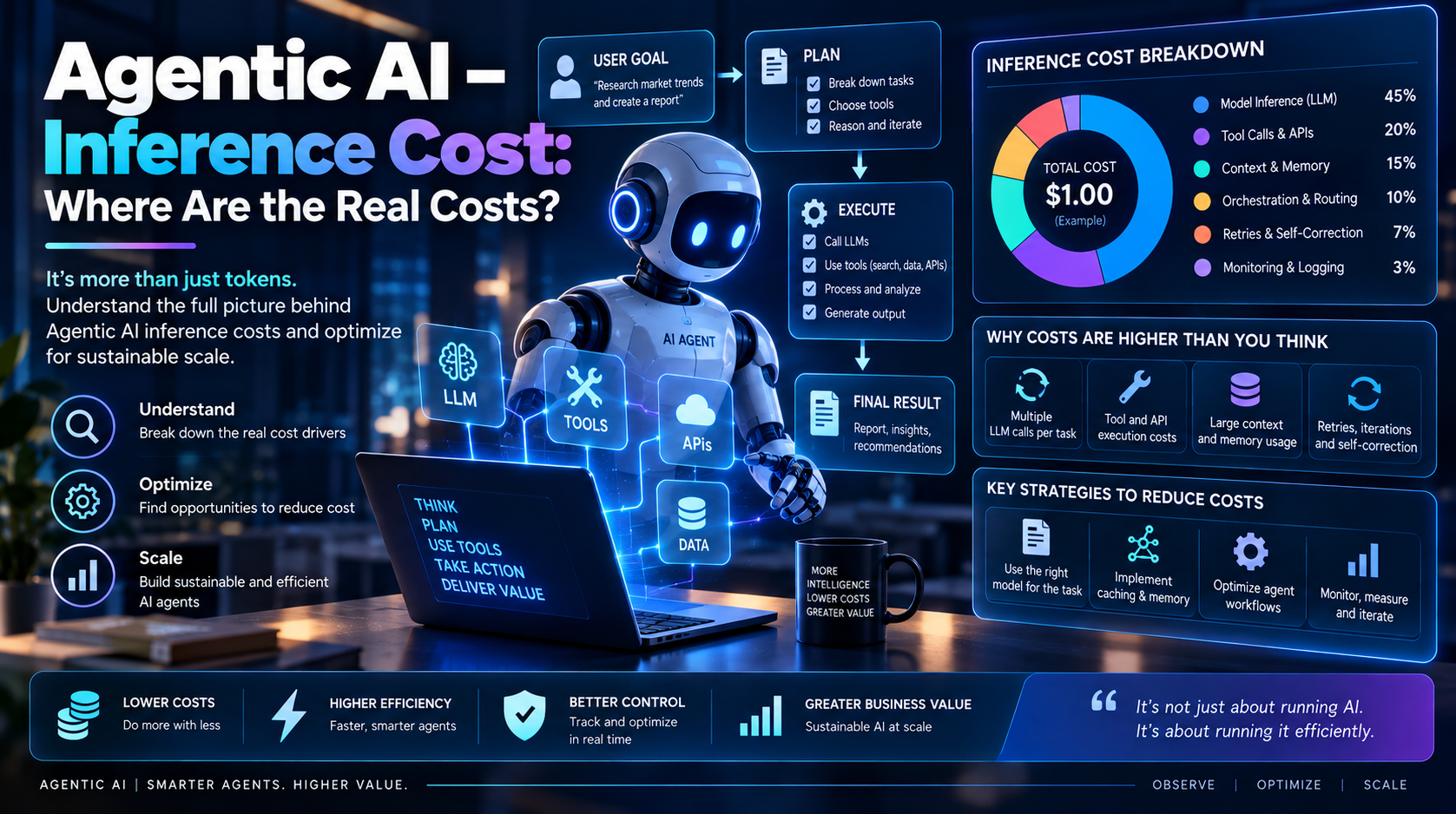
The Components of Inference Cost
1. LLM Token Cost
This is the most visible expense.
Typical charges include:
- Input tokens
- Output tokens
- Context window usage
- Premium reasoning models
- Large context models
For many organizations, token usage is only one part of the overall AI budget.
2. Multi-Agent Execution
Agentic AI rarely uses a single model call.
A workflow might include:
- Planner Agent
- Research Agent
- Analysis Agent
- Report Agent
- Reviewer Agent
Each agent may call an LLM independently.
Five agents can easily generate ten or more model invocations for a single business request.
As workflows become more sophisticated, inference costs increase accordingly.
3. Retrieval-Augmented Generation (RAG)
Many enterprise AI systems retrieve knowledge before generating responses.
A typical retrieval process includes:
- Embedding generation
- Vector search
- Document ranking
- Context assembly
- Prompt construction
Although these steps may not involve expensive LLM calls, they still consume compute resources and introduce latency.
4. Tool Execution
Modern AI agents interact with enterprise systems.
Examples include:
- CRM platforms
- ERP systems
- Email services
- Search engines
- Databases
- Payment systems
- Document repositories
Each tool invocation consumes infrastructure resources and may introduce additional costs.
5. Orchestration
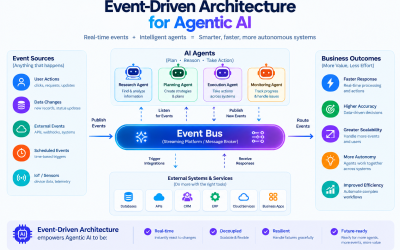
Enterprise Agentic AI platforms rely on orchestration engines to:
- Plan tasks
- Coordinate agents
- Manage workflows
- Track state
- Handle retries
- Recover from failures
While orchestration does not generate AI content, it requires compute resources and operational infrastructure.
6. Memory Operations
Persistent memory improves AI quality but introduces additional costs.
Examples include:
- Reading conversation history
- Writing long-term memory
- Updating vector databases
- Storing embeddings
- Retrieving semantic context
Memory systems become increasingly expensive as AI platforms scale.
7. Infrastructure
Running AI requires much more than LLM APIs.
Infrastructure costs may include:
- GPU instances
- CPU resources
- Kubernetes clusters
- API gateways
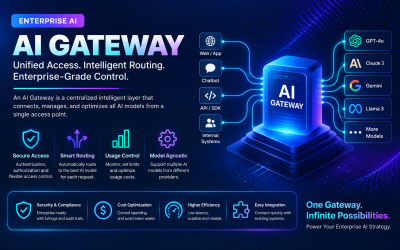
- AI gateways
- Message brokers
- Databases
- Object storage
- Networking
- Monitoring platforms
These operational costs often grow alongside AI adoption.
8. Security and Governance
Enterprise AI platforms perform additional processing before and after model inference.
Examples include:
- Prompt validation
- Prompt injection detection
- PII masking
- Output moderation
- Policy enforcement
- Audit logging
- Compliance checks
Although these safeguards add overhead, they are essential for production environments.
9. Human-in-the-Loop
Not every AI decision can be automated.
Critical workflows often require:
- Human approval
- Quality review
- Exception handling
- Compliance verification
Human involvement increases operational cost but significantly reduces business risk.
Example Cost Breakdown
Consider a request:
“Analyze quarterly sales, generate a presentation, and email it to executives.”
A possible execution path:
Planner Agent

      │

3 LLM Calls

      │

Knowledge Retrieval

      │

Vector Database

      │

Analytics Tool

      │

Presentation Generator

      │

Email Service

      │

Human Approval

      │

Final Response
The total inference cost includes:
- Multiple LLM requests
- Vector search
- External APIs
- Compute resources
- Storage
- Monitoring
- Human review
The LLM itself may account for only a portion of the total expense.
Hidden Costs Enterprises Often Overlook
Organizations frequently underestimate costs such as:
- Prompt engineering
- Model evaluation
- AI monitoring
- Workflow retries
- Failed agent executions
- Token waste
- Context inflation
- Long conversation histories
- Duplicate retrieval operations
- Idle GPU capacity
Over time, these hidden costs can exceed direct model pricing.
Strategies to Reduce Inference Costs
Choose the Right Model
Not every task requires the most advanced reasoning model.
Simple requests can often use smaller, faster, and more affordable models.
Reduce Token Usage
Optimize prompts by:
- Removing unnecessary instructions
- Compressing context
- Limiting conversation history
- Eliminating duplicate information
Smaller prompts reduce token consumption and improve response times.
Optimize Multi-Agent Workflows
Avoid unnecessary agent interactions.
Each additional planning step or validation agent increases overall cost.
Only introduce agents that provide measurable business value.
Cache Responses
Many enterprise requests are repetitive.
Caching common responses can eliminate unnecessary model invocations.
Improve Retrieval Quality
Better retrieval leads to:
- Smaller prompts
- Fewer hallucinations
- Less reprocessing
- Reduced token usage
High-quality RAG systems often lower overall inference costs.
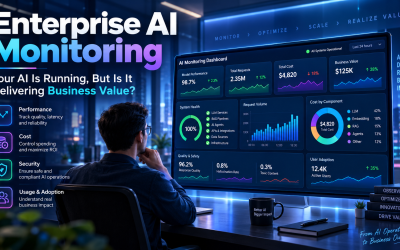
Monitor AI Spending
Organizations should continuously track:
- Cost per request
- Cost per workflow
- Cost per department
- Cost per AI agent
- Cost per customer interaction
Visibility enables informed optimization decisions.
Measuring Cost Beyond Tokens
Enterprise AI leaders should evaluate metrics such as:
- Cost per completed workflow
- Cost per business transaction
- Cost per successful agent execution
- Cost per customer served
- Cost per generated report
- Cost per software release
- Cost per sales opportunity
These business-oriented metrics provide a more accurate view of AI return on investment.
Best Practices
To control inference costs effectively:
- Design workflows around business value rather than model capability alone.
- Route requests to the most appropriate model.
- Minimize unnecessary agent interactions.
- Continuously optimize prompts and context windows.
- Cache predictable responses.
- Monitor token usage in real time.
- Measure AI costs alongside business outcomes.
- Review workflows regularly to eliminate inefficiencies.
Conclusion
In the era of Agentic AI, inference cost is no longer just the price of an LLM API call.
The true cost includes orchestration, retrieval, memory, infrastructure, security, governance, external tools, and human oversight.
Organizations that focus only on token pricing risk optimizing the wrong part of the system.
The most successful enterprises measure the total cost of delivering business value, not simply the cost of generating text.
As Agentic AI platforms continue to evolve, understanding and optimizing inference costs will become a key competitive advantage—allowing organizations to build AI systems that are not only intelligent, but also efficient, scalable, and economically sustainable.
Write Your Review
No reviews yet. Be the first to share your experience!