
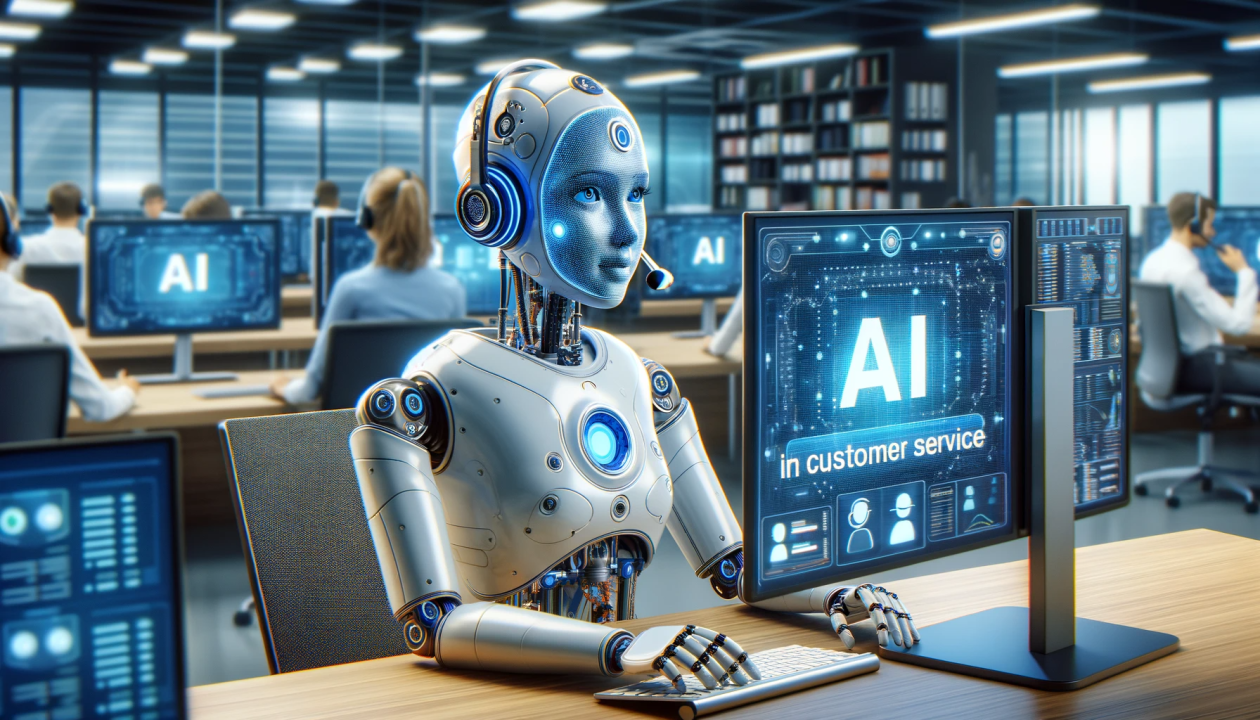
AI-Powered Customer Service is an enterprise AI deployment model that uses artificial intelligence to enhance and automate customer support operations. By combining Generative AI, chatbots, voice assistants, and automation technologies, businesses can provide faster, smarter, and more personalized customer experiences.
Unlike traditional customer service systems that rely entirely on human agents, AI-powered customer service enables companies to handle large volumes of customer requests automatically while allowing human employees to focus on complex cases that require empathy, creativity, and strategic decision-making.
Today, this model is widely adopted across industries such as e-commerce, banking, telecommunications, healthcare, travel, and SaaS businesses.
Objectives of AI-Powered Customer Service
Companies implement AI customer service solutions to achieve several goals:
- Provide 24/7 customer support.
- Reduce response times.
- Automate repetitive customer inquiries.
- Improve customer satisfaction.
- Reduce operational costs.
- Deliver personalized customer experiences.
- Support human agents with AI-powered recommendations.
For example, instead of waiting hours for a response, customers can instantly receive answers about product information, order status, account issues, or frequently asked questions through an AI assistant.
AI-Powered Customer Service Architecture
A typical AI customer service system consists of five main layers:
1. Customer Interaction Layer
This is where customers communicate with AI systems:
- Website chatbots.
- Mobile applications.
- Social media messaging.
- Email support.
- Voice assistants.
- Contact center platforms.
Customers can communicate naturally through text or voice without navigating complex support systems.
2. AI Intelligence Layer
The AI engine processes customer requests using:
- Large Language Models (LLMs).
- Natural Language Processing (NLP).
- Machine Learning.
- Speech Recognition.
- Sentiment Analysis.
AI can:
- Understand customer questions.
- Identify customer intent.
- Generate relevant responses.
- Detect customer emotions.
- Recommend solutions.
3. Customer Knowledge Base Layer
AI systems use business knowledge sources such as:
- Product documentation.
- Customer FAQs.
- Service policies.
- Troubleshooting guides.
- Pricing information.
- Customer support history.
This allows AI to provide accurate and consistent answers based on company-specific information.
4. Business System Integration Layer
AI customer service platforms connect with:
- CRM systems.
- Order management systems.
- Payment platforms.
- Customer databases.
- Ticketing systems.
- Marketing automation tools.
Example:
A customer asks:
“Where is my order?”
The AI assistant can access order management data and immediately provide delivery updates.
5. Human Support & Security Layer
AI works together with human agents through:
- AI-generated response suggestions.
- Automatic ticket classification.
- Customer conversation summaries.
- Agent productivity tools.
- Secure data access controls.
Complex issues can be automatically transferred to human employees with full conversation context.
Common AI Customer Service Applications
1. AI Chatbots
AI chatbots handle common customer requests:
- Product questions.
- Account support.
- Order tracking.
- Return policies.
- Service information.
Benefits:
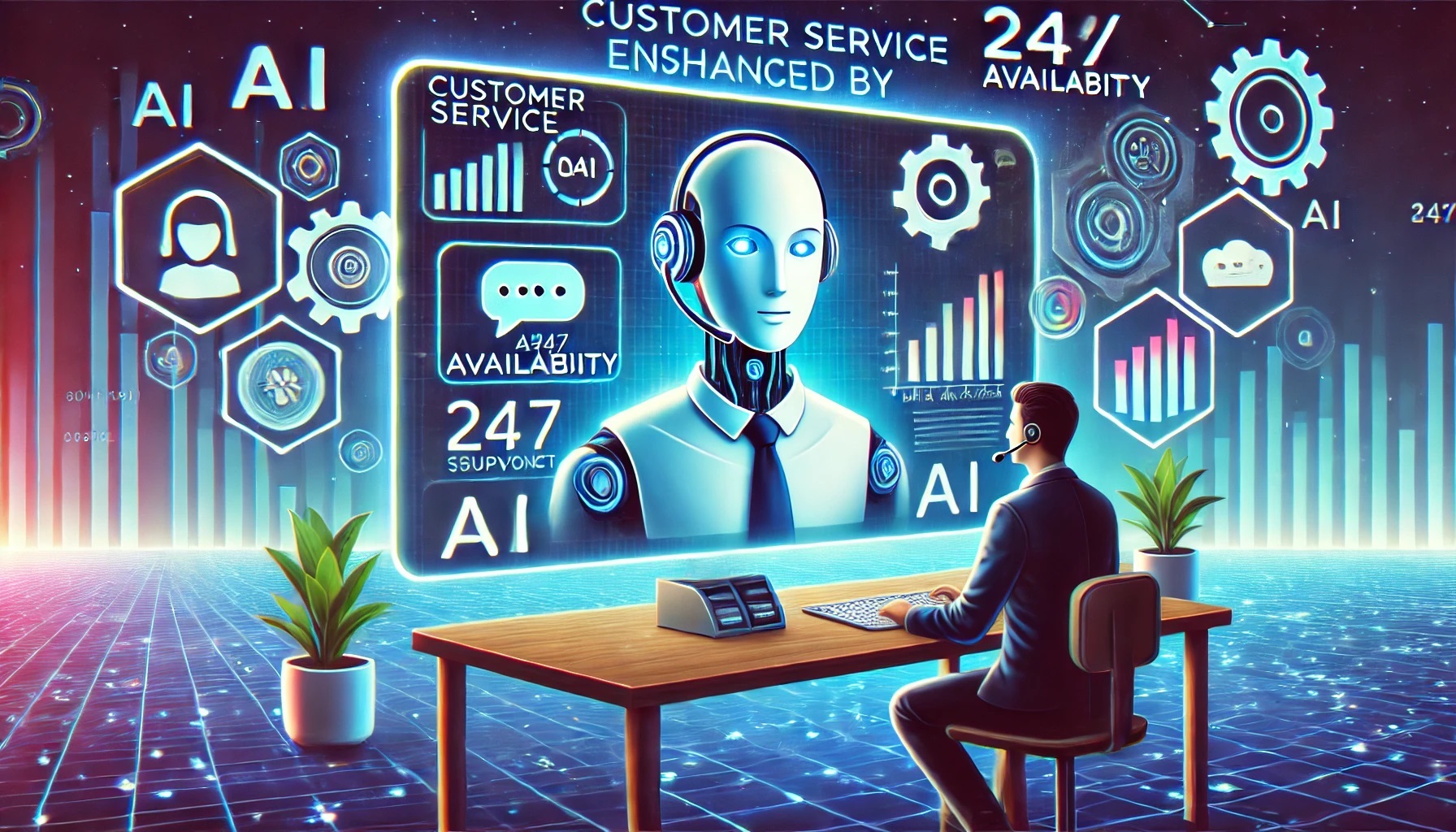
- Available 24/7.
- Handles thousands of conversations simultaneously.
- Reduces workload for support teams.
2. AI Voice Assistants
Voice AI enables automated phone support:
- Customer identification.
- Appointment scheduling.
- Service requests.
- Call routing.
- Basic troubleshooting.
This helps businesses improve call center efficiency.
3. Intelligent Ticket Management
AI can automatically:
- Classify customer requests.
- Prioritize urgent issues.
- Assign tickets to the right department.
- Summarize customer conversations.
This improves response speed and operational efficiency.
4. Customer Sentiment Analysis
AI analyzes customer emotions through:
- Text messages.
- Emails.
- Phone conversations.
- Reviews.
Businesses can identify:
- Customer dissatisfaction.
- Potential complaints.
- Service improvement opportunities.
5. Personalized Customer Recommendations
AI analyzes customer data to provide:
- Product recommendations.
- Personalized offers.
- Relevant content.
- Next-best actions.
This improves customer engagement and conversion rates.
AI Customer Service Implementation Roadmap
Step 1: Analyze Customer Support Processes
Identify:
- Most common customer questions.
- Repetitive support tasks.
- High-volume service channels.
- Current customer pain points.
Step 2: Start with AI Pilot Projects
Deploy AI in selected areas:
- FAQ chatbot.
- Order tracking assistant.
- Internal customer support assistant.
Measure performance before full deployment.
Step 3: Integrate Customer Data
Connect AI with:
- CRM platforms.
- Customer databases.
- Product systems.
- Support ticket platforms.
This enables personalized and accurate responses.
Step 4: Train AI Models
Improve AI performance by providing:
- Historical customer conversations.
- Product documentation.
- Service guidelines.
- Company knowledge.
Step 5: Monitor and Optimize
Track key metrics:
- Response time.
- Customer satisfaction score (CSAT).
- Resolution rate.
- AI accuracy.
- Cost savings.
Continuously improve AI performance based on customer feedback.
Business Benefits of AI-Powered Customer Service
Faster Customer Response
AI provides instant answers and reduces waiting time.
Lower Operational Costs
Automation reduces the workload for customer service teams.
Better Customer Experience
Customers receive faster and more personalized support.
Higher Employee Productivity
Human agents can focus on complex and high-value customer interactions.
Scalable Support Operations
Businesses can handle increasing customer demand without significantly increasing staffing costs.
Challenges to Consider
Data Privacy
Customer information must be protected through strong security policies.
AI Accuracy
AI responses should be monitored to prevent incorrect information.
Human Interaction Balance
AI should support human agents rather than completely replace customer relationships.
Continuous Training
AI systems need regular updates with new products, policies, and customer feedback.
Conclusion
AI-Powered Customer Service is transforming how businesses interact with customers by combining automation, intelligence, and human expertise. By implementing AI chatbots, voice assistants, and intelligent support systems, companies can deliver faster responses, reduce operational costs, and create more personalized customer experiences.
In the future, AI customer service will become an essential component of modern business operations, helping organizations build stronger customer relationships and achieve greater efficiency in the digital economy.
Write Your Review
No reviews yet. Be the first to share your experience!