
Today's customers expect fast, personalized, and efficient service whenever they contact a business. Long wait times, multiple call transfers, and reaching the wrong department can quickly turn a positive experience into a frustrating one. According to customer service research, poor call handling remains one of the leading reasons customers switch to competitors.
This is where CloudTalk's intelligent Call Routing becomes a game changer.
Rather than sending every caller into the same queue, CloudTalk automatically directs each call to the most appropriate destination based on customizable rules. Whether you're managing a small support team or a global contact center, intelligent call routing helps reduce response times, improve agent productivity, and create a seamless customer journey.
In this guide, we'll explore how CloudTalk Call Routing works, its key features, and best practices for delivering outstanding customer experiences.
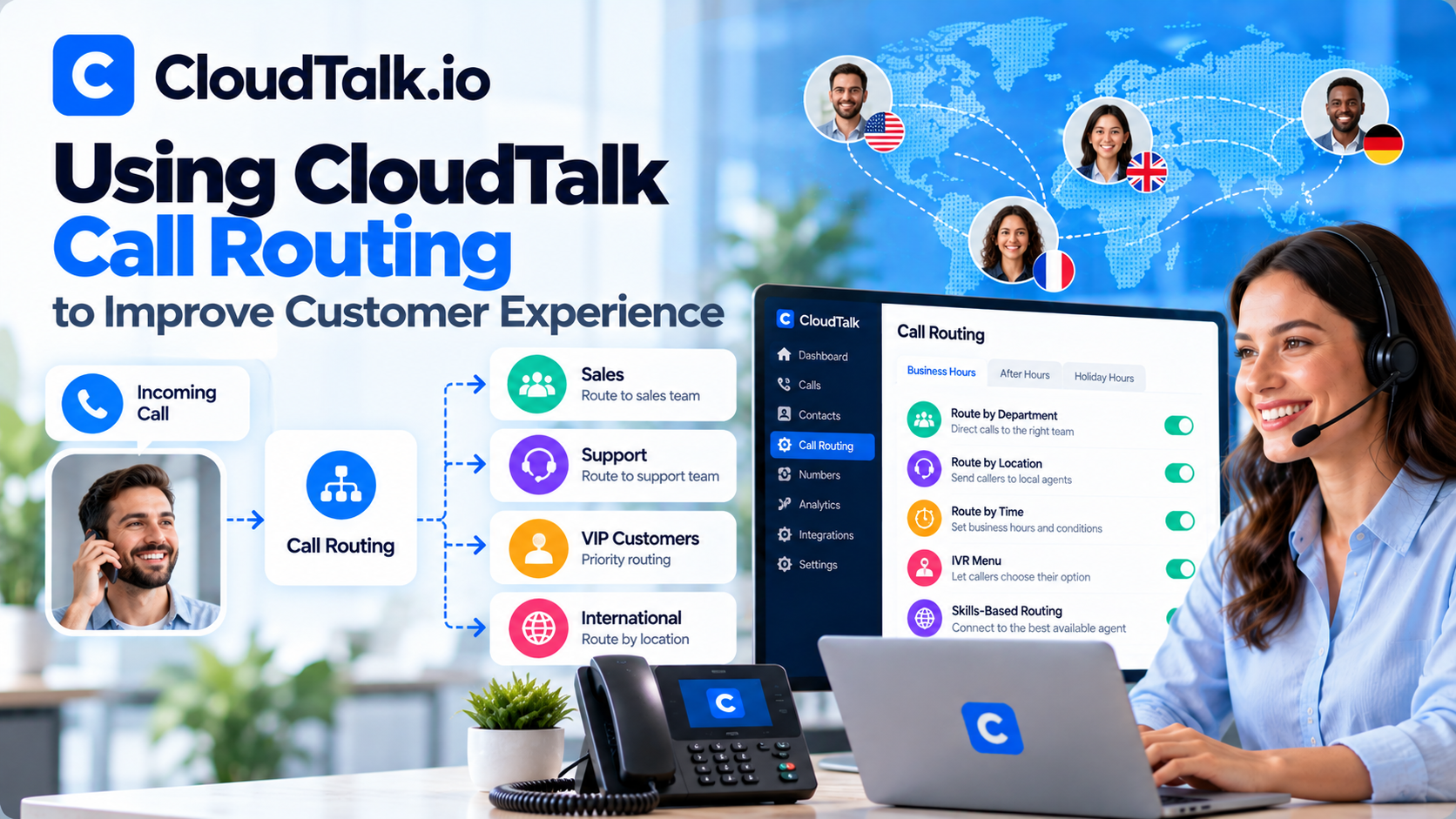
What Is Call Routing?
Call routing is the process of automatically directing incoming phone calls to the most suitable person, department, or team based on predefined rules.
Instead of manually transferring callers between departments, CloudTalk evaluates information such as:
- Business hours
- Department selection
- Agent availability
- Customer priority
- Language preference
- Agent skills
- Geographic location
The result is faster service and fewer unnecessary call transfers.
Why Intelligent Call Routing Matters
Customers contact businesses because they need answers quickly. Every unnecessary transfer or long wait increases frustration and decreases customer satisfaction.
Poor call routing often leads to:
- Long waiting queues
- Repeated explanations
- Missed calls
- Lost sales opportunities
- Low first-call resolution
- Increased agent workload
CloudTalk eliminates these issues by ensuring callers reach the right person as efficiently as possible.
How CloudTalk Call Routing Works
CloudTalk uses automated workflows to manage every incoming call.
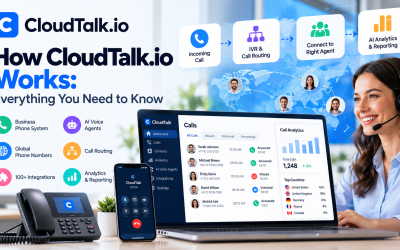
A typical call flow looks like this:
Customer Calls Business
↓
Greeting Message
↓
Interactive Voice Response (IVR)
↓
Call Routing Rules
↓
Available Agent
↓
Conversation Begins
If no agents are available, CloudTalk can:
- Place callers in a queue
- Offer voicemail
- Schedule a callback
- Redirect to another department
- Route to an AI Voice Agent
Everything happens automatically without requiring manual intervention.
Key Call Routing Features
1. Interactive Voice Response (IVR)
CloudTalk's IVR system acts as the first point of contact for callers.
For example:
Press 1 for Sales
Press 2 for Customer Support
Press 3 for Billing
Press 4 for Technical Support
Alternatively, businesses can enable conversational AI so customers simply describe what they need instead of navigating phone menus.
Benefits include:
- Faster department selection
- Reduced call transfers
- Improved customer satisfaction
2. Business Hours Routing
Not every business operates 24/7.
CloudTalk allows administrators to create different routing rules based on office hours.
For example:
During Business Hours
- Route directly to support agents.
After Hours
- Send calls to voicemail.
- Connect callers to an AI Voice Agent.
- Offer emergency contact options.
- Schedule callbacks.
Customers always receive appropriate assistance, even when offices are closed.
3. Skill-Based Routing
Different agents have different expertise.
CloudTalk can automatically route calls based on agent skills.
Examples include:
- Technical support
- Billing specialists
- Enterprise sales
- Customer success
- Product experts
- Multilingual representatives
Skill-based routing improves first-call resolution because customers speak directly with qualified specialists.
4. Language-Based Routing
For international businesses, language can significantly impact customer satisfaction.
CloudTalk routes callers to agents who speak their preferred language.
Examples:
- English
- Spanish
- French
- German
- Italian
- Portuguese
Providing support in a customer's native language creates a more personalized and comfortable experience.
5. VIP Customer Routing
Not all customers have the same business value.
CloudTalk allows organizations to prioritize:
- Enterprise clients
- Premium subscribers
- High-value accounts
- Long-term customers
- Strategic partners
VIP callers can bypass standard queues and receive faster access to experienced agents.
6. Queue Management
When all agents are busy, CloudTalk intelligently manages incoming call queues.
Businesses can configure:
- Maximum queue length
- Estimated wait times
- Hold music
- Queue announcements
- Callback options
Instead of abandoning calls, customers stay informed while waiting.
7. Agent Availability Routing
CloudTalk monitors each agent's status in real time.
Calls are automatically routed based on whether agents are:
- Available
- Busy
- Offline
- On break
- In another call
This ensures customers connect with the next available representative without unnecessary delays.
Benefits for Customer Experience
Faster Response Times
Customers spend less time waiting because CloudTalk immediately routes calls to the correct destination.
This creates:
- Shorter queues
- Faster resolutions
- Better first impressions
Fewer Call Transfers
Repeated transfers frustrate customers.
By directing callers correctly the first time, CloudTalk reduces unnecessary handoffs and creates a smoother support experience.
Higher First-Call Resolution
Connecting customers with specialists increases the likelihood that issues are resolved during the first conversation.
This benefits both customers and support teams.
Personalized Service
Routing based on language, customer history, or account type creates more personalized interactions.
Customers feel valued when they speak with representatives familiar with their needs.
Better Agent Productivity
Agents spend less time redirecting calls and more time solving problems.
This increases:
- Efficiency
- Employee satisfaction
- Daily call capacity
- Overall service quality
Industry Use Cases
SaaS Companies
Automatically route:
- Sales inquiries
- Technical support
- Customer success
- Billing questions
Each department receives only the calls relevant to its expertise.
E-commerce
Route customers based on:
- Orders
- Returns
- Shipping
- Product support
- Payment issues
This reduces confusion and speeds up issue resolution.
Healthcare
Healthcare providers can route callers to:
- Appointment scheduling
- Billing departments
- Medical records
- Emergency support
- Individual clinics
Patients receive faster assistance while administrative staff become more efficient.
Recruitment Agencies
Recruiters can direct calls to:
- Candidate support
- Employer inquiries
- Interview scheduling
- Account managers
This improves communication for both job seekers and employers.
Best Practices for Call Routing
To maximize the benefits of CloudTalk Call Routing:
- Keep IVR menus simple with no more than four or five options.
- Regularly review call analytics to identify bottlenecks.
- Use skill-based routing for specialized departments.
- Enable AI Voice Agents for after-hours support.
- Offer callback options during peak periods.
- Update routing rules as teams grow or business needs change.
- Test call flows regularly to ensure they work as expected.
A well-designed routing strategy reduces customer effort and improves operational efficiency.
Why Businesses Choose CloudTalk
Organizations switch to CloudTalk because its routing capabilities combine flexibility with automation.
Compared to traditional PBX systems, CloudTalk offers:
- Cloud-based deployment
- Intelligent automation
- AI-powered routing
- CRM integration
- Real-time analytics
- Global scalability
- Easy administration
As businesses grow, routing rules can be updated without purchasing additional hardware or making complex infrastructure changes.


Write Your Review
No reviews yet. Be the first to share your experience!