
Every sales team shares the same goal: closing more deals in less time. However, many businesses still struggle with inefficient workflows, disconnected tools, and time-consuming administrative tasks that reduce selling time.
According to industry research, sales representatives often spend less than one-third of their workday actively selling. The rest is consumed by updating CRM records, switching between applications, scheduling follow-ups, and searching for customer information.
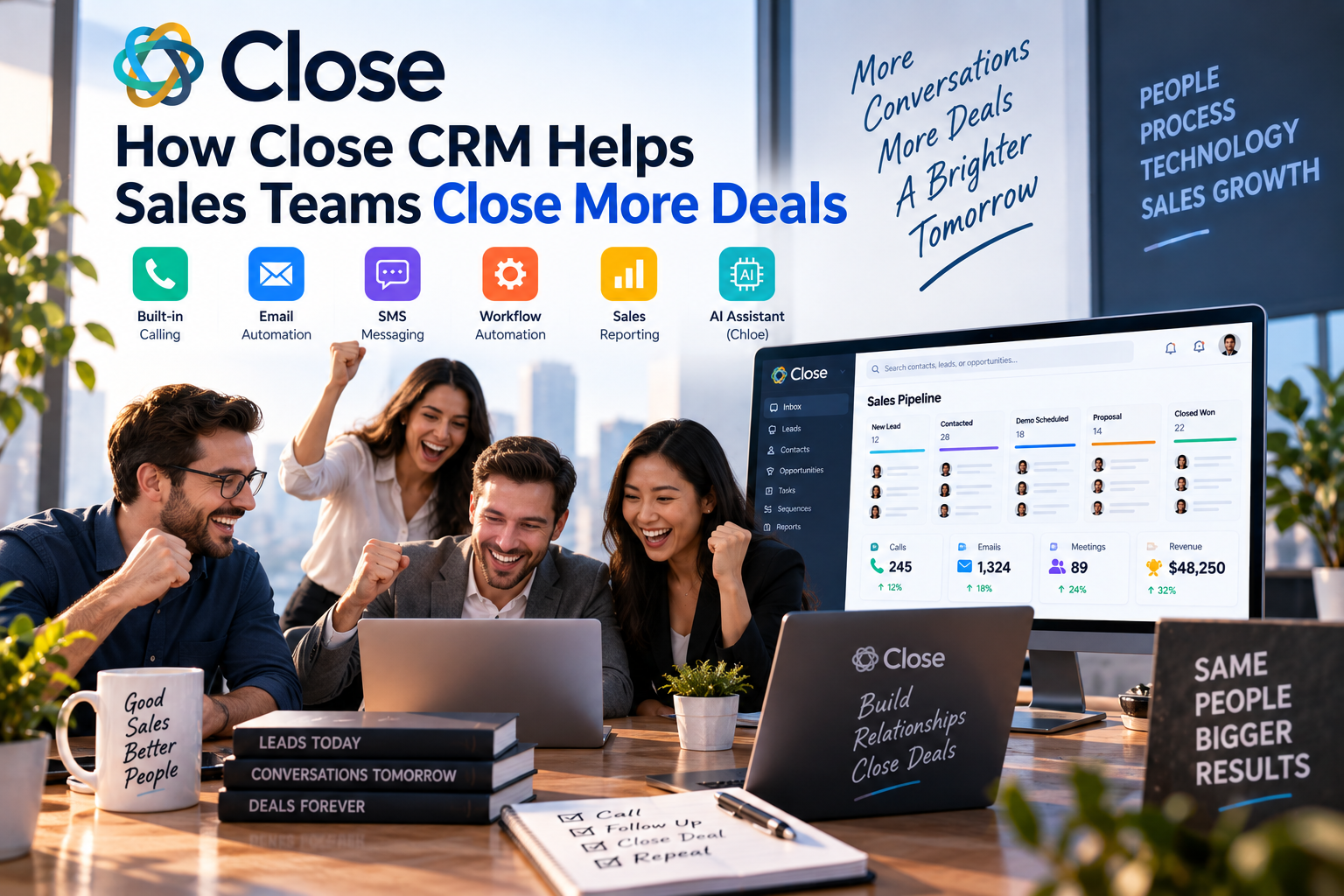
Close CRM was designed to solve these challenges. Rather than functioning as a traditional contact database, it serves as a complete sales engagement platform that combines communication, automation, and pipeline management into a single workspace.
In this article, we'll explore how Close CRM helps modern sales teams improve productivity, strengthen customer relationships, and ultimately close more deals.
Why Sales Teams Need More Than a Traditional CRM
Many CRM platforms focus primarily on storing customer data. While this is important, today's sales teams also need tools that help them engage prospects quickly and consistently.
Successful sales teams require:
- Fast access to customer information
- Efficient communication channels
- Automated follow-ups
- Accurate sales forecasting
- Real-time performance tracking
- AI-powered productivity tools
Close CRM brings these capabilities together in one platform, reducing the need for multiple disconnected applications.
1. Built-in Calling Keeps Sales Reps Selling
One of Close CRM's biggest advantages is its integrated cloud phone system.
Instead of using third-party dialers, sales representatives can:
- Make calls directly from the CRM
- Receive inbound calls
- Record conversations
- Automatically log call activity
- Review call history
- Use the Power Dialer for high-volume outreach
This streamlined workflow eliminates manual data entry and allows reps to focus on meaningful conversations with prospects.
For businesses that rely on outbound sales, this feature alone can significantly improve efficiency.
2. Centralized Communication Improves Customer Relationships
Modern buyers communicate through multiple channels.
Close CRM combines:
- Phone calls
- SMS messages
- Notes
- Tasks
- Meetings
into a single customer timeline.
Instead of searching across different applications, sales representatives can instantly view every interaction with a prospect.
This complete context helps teams personalize conversations, avoid repetitive questions, and deliver a better customer experience.
3. Email Automation Saves Valuable Time
Following up consistently is one of the biggest challenges in sales.
Close CRM helps automate repetitive communication through:
- Email templates
- Personalized sequences
- Open tracking
- Link tracking
- Automated follow-ups
Rather than manually sending each email, sales teams can build structured sequences that maintain regular communication while still allowing personalization when needed.
Automation ensures that no opportunity is forgotten.
4. AI Features Reduce Administrative Work
Artificial intelligence is transforming the way sales teams operate.
Close CRM includes several AI-powered features that help representatives spend less time on administrative tasks.
These include:
AI Call Summaries
Automatically generates summaries after customer conversations.
AI Meeting Notes
Captures important discussion points without manual note-taking.
AI Email Assistance
Suggests clearer, more professional email responses.
AI Lead Enrichment
Adds valuable customer information to improve prospect research.
These tools allow representatives to spend more time building relationships and less time managing paperwork.
5. Visual Sales Pipelines Improve Deal Management
Close CRM provides customizable sales pipelines that make every opportunity easy to track.
Managers and representatives can quickly see:
- Current deal stage
- Opportunity value
- Expected close date
- Assigned owner
- Next action
Visual pipelines reduce confusion and help teams prioritize high-value opportunities.
Sales managers can also identify stalled deals before they become lost opportunities.
6. Workflow Automation Eliminates Repetitive Tasks
Sales success depends on consistency.
Close CRM automates routine processes such as:
- Lead assignment
- Task creation
- Follow-up reminders
- Pipeline updates
- Email sequences
- Activity notifications
These workflows ensure that every lead receives timely attention while reducing manual effort.
Automation also helps maintain standardized sales processes across growing teams.
7. Reporting Helps Teams Make Better Decisions
Data-driven sales organizations outperform those relying on intuition alone.
Close CRM provides real-time reporting on:
- Calls completed
- Emails sent
- Pipeline value
- Conversion rates
- Team activity
- Revenue forecasting
Managers can use these insights to identify top performers, improve coaching, and optimize sales strategies.
Real-World Use Cases
SaaS Companies
Sales teams can manage free trials, product demos, and subscription renewals while tracking every customer interaction.
Sales Agencies
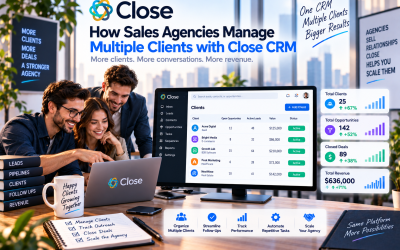
Agencies handling multiple clients can organize separate pipelines and automate outreach campaigns.
Recruiting Firms
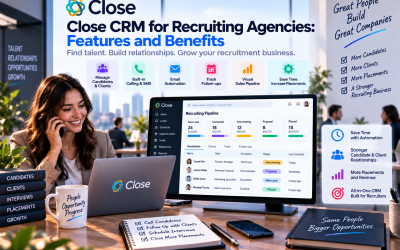
Recruiters benefit from integrated calling, email, and task management when communicating with candidates.
Consulting Businesses
Consultants can monitor leads from the first inquiry through signed contracts while maintaining complete communication records.
Remote Sales Teams
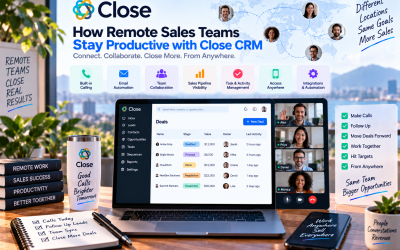
Cloud-based communication tools allow distributed teams to collaborate effectively from anywhere.
Why Businesses Choose Close CRM
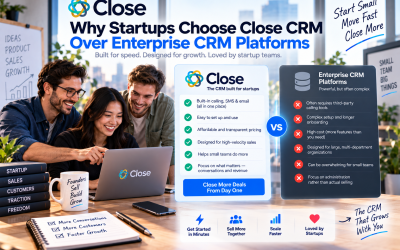
Many organizations adopt Close CRM because it combines multiple sales tools into one platform.
Instead of paying separately for:
- CRM software
- Calling software
- Email tracking
- SMS platform
- Sales automation tools
Close delivers these capabilities in a unified solution.
This not only reduces software costs but also improves team productivity by eliminating constant app switching.
Is Close CRM Right for Every Sales Team?
While Close CRM is an excellent solution for many businesses, it's not designed for every use case.
It is best suited for:
- Startups
- Small and medium-sized businesses
- SaaS companies
- Sales agencies
- Outbound sales teams
- B2B service providers
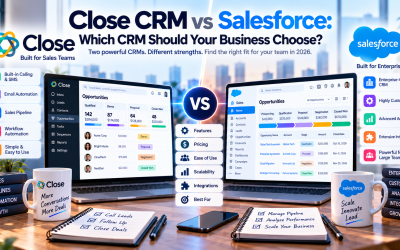
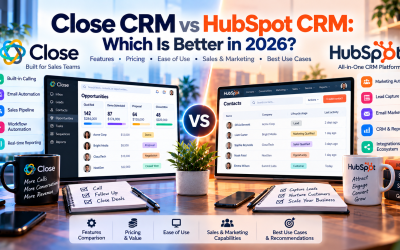
Organizations requiring advanced marketing automation or enterprise-level customization may find platforms like HubSpot or Salesforce more appropriate.
Final Verdict
Close CRM is more than a traditional CRM—it's a comprehensive sales engagement platform built to help teams sell more efficiently. By integrating calling, email, SMS, automation, and AI-powered tools into one intuitive interface, it removes many of the obstacles that slow down modern sales organizations.
Its greatest strength lies in reducing administrative work, enabling representatives to spend more time engaging prospects and building relationships. Combined with customizable pipelines, workflow automation, and insightful reporting, Close CRM provides everything growing sales teams need to improve productivity and increase conversions.
If your business depends on outbound sales and values simplicity, automation, and integrated communication, Close CRM is one of the best CRM solutions available in 2026.

Write Your Review
No reviews yet. Be the first to share your experience!