
A great online course isn't just about high-quality content—it's also about how that content is organized. A clear course structure helps students stay focused, understand concepts more easily, and complete courses with confidence.
LearnWorlds provides flexible tools for organizing lessons, modules, and learning paths, making it easy to design a professional learning experience. Here's how to do it effectively.
Why Course Organization Matters
Students are more likely to complete a course when lessons follow a logical progression.
A well-structured course helps learners:
- Understand concepts step by step
- Avoid information overload
- Stay motivated
- Track their progress
- Achieve learning goals faster
Instead of presenting information randomly, guide students through a clear learning journey.
Step 1: Start with Learning Objectives
Before creating lessons, define what students should achieve by the end of the course.
Ask yourself:
- What problem will this course solve?
- What skills will students gain?
- What should they be able to do after completing the course?
Clear learning objectives make it easier to organize lessons in the right sequence.
Step 2: Divide Your Course into Modules
Rather than creating one long list of lessons, group related topics into modules.
For example:
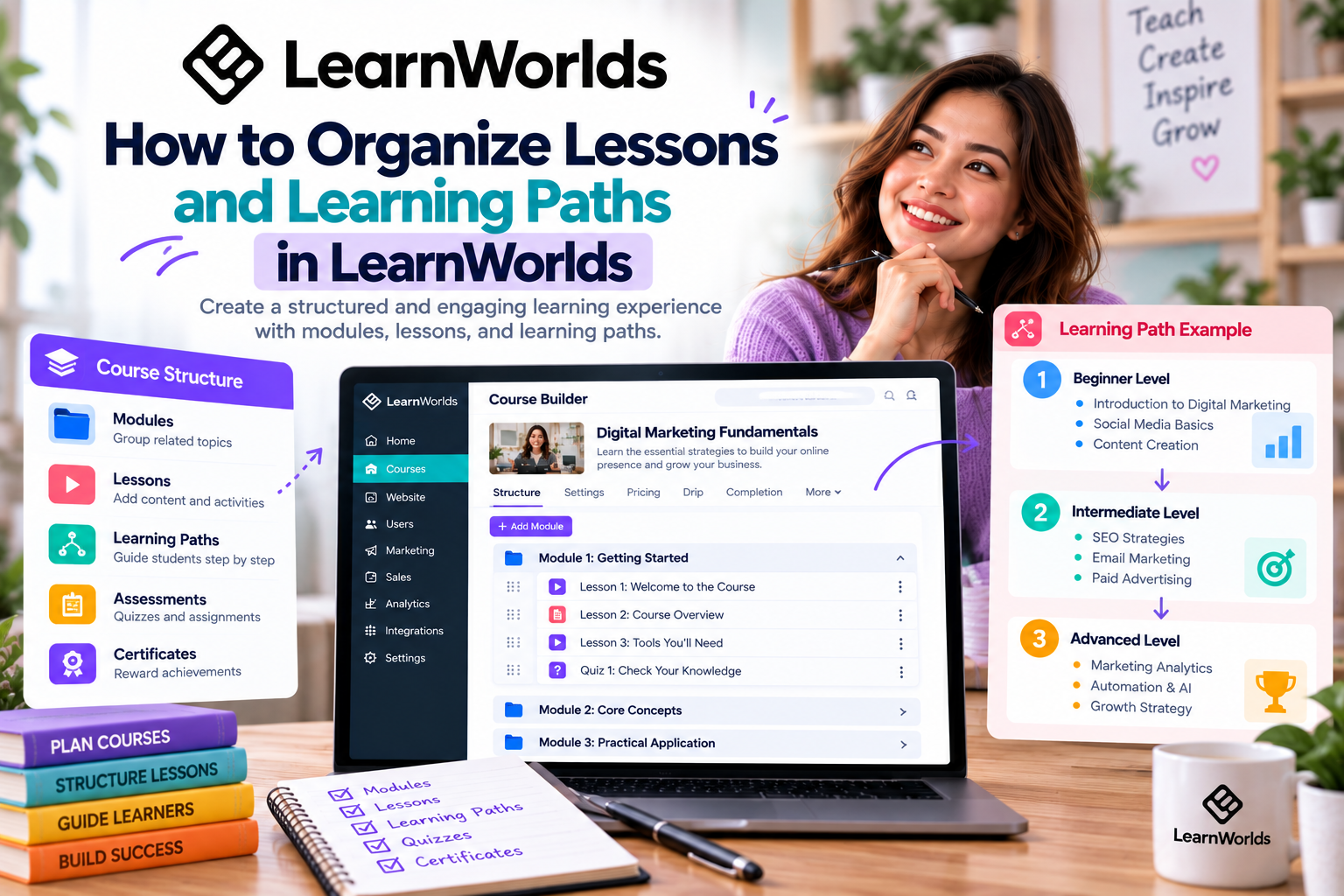
Module 1: Getting Started
- Welcome
- Course Overview
- Required Tools
Module 2: Core Concepts
- Lesson 1
- Lesson 2
- Quiz
Module 3: Practical Application
- Case Study
- Assignment
- Project
Modules create milestones that help students feel a sense of progress.
Step 3: Keep Lessons Short and Focused
Long lessons can reduce attention and retention.
Instead, aim for lessons that cover one topic at a time.
Good examples include:
- A 10-minute video explaining one concept
- A downloadable worksheet
- A short quiz
- A practical exercise
Breaking content into smaller lessons makes learning more manageable and encourages consistent progress.
Step 4: Mix Different Content Types
People learn in different ways, so avoid relying only on video lectures.
LearnWorlds supports multiple lesson formats, including:
- Videos
- Interactive videos
- PDFs
- Audio files
- eBooks
- Quizzes
- Assignments
- Live sessions
- SCORM packages
Using a variety of content keeps learners engaged and improves knowledge retention.
Step 5: Create Learning Paths
A learning path is a structured sequence of courses or lessons that guides students toward a specific goal.
For example, a Digital Marketing Academy could include:
Learning Path 1 – Beginner
- Marketing Fundamentals
- Social Media Basics
- Content Creation
Learning Path 2 – Intermediate
- SEO
- Email Marketing
- Google Ads
Learning Path 3 – Advanced
- Marketing Automation
- Analytics
- AI for Marketing
This approach encourages students to continue learning and enroll in additional courses.
Step 6: Add Assessments Along the Way
Regular assessments reinforce learning and help students measure their progress.
Consider including:
- Quick quizzes after each module
- Practical assignments
- Reflection questions
- Final projects
- Completion certificates
Frequent feedback keeps students motivated and identifies areas that need improvement.
Step 7: Review the Student Experience
Before publishing your course, experience it from a student's perspective.
Check that:
- Lessons appear in the correct order.
- Navigation is simple and intuitive.
- Videos and downloads work properly.
- Quizzes function correctly.
- Progress tracking is accurate.
A smooth learning experience reduces frustration and improves course completion rates.
Best Practices
To create effective learning paths in LearnWorlds:
- Begin with simple concepts before introducing advanced topics.
- Limit each lesson to one primary objective.
- Use consistent lesson titles and module names.
- Combine videos with interactive activities.
- Include quizzes and assignments throughout the course.
- Update learning materials regularly to keep content current.
Small improvements in course organization can significantly enhance student engagement and satisfaction.
Final Thoughts
Organizing lessons and learning paths is one of the most important steps in creating a successful online course. LearnWorlds makes this process simple by allowing instructors to build structured modules, combine multiple content formats, and design guided learning journeys that keep students engaged from start to finish.
By focusing on logical progression, interactive learning, and clear objectives, you can create courses that not only educate but also inspire students to complete their learning journey and return for more.










Write Your Review
No reviews yet. Be the first to share your experience!