
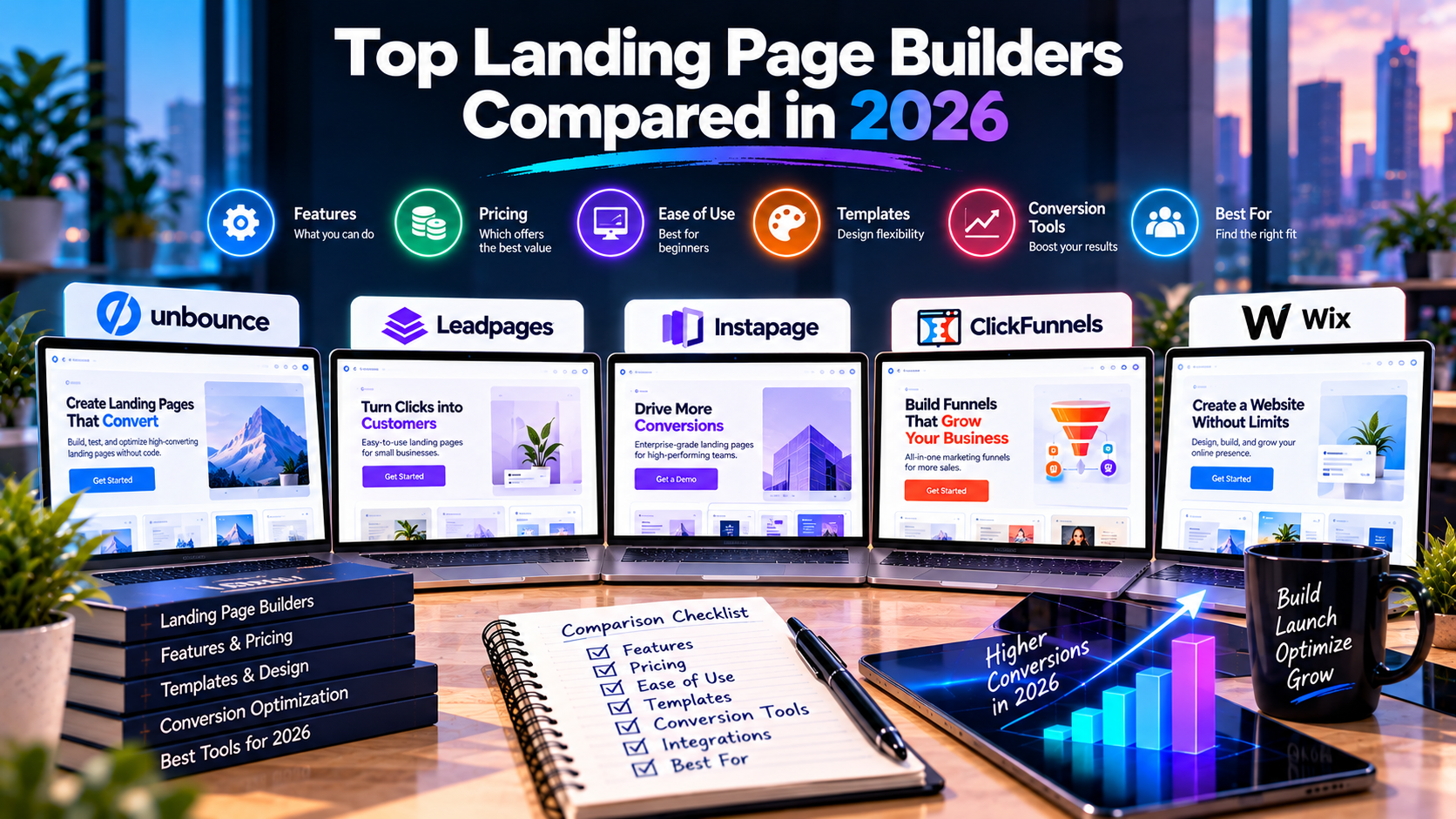
Choosing the right landing page builder can have a significant impact on your marketing success. Whether you're generating leads, selling products, promoting webinars, or running Google Ads campaigns, a high-converting landing page is essential for maximizing your return on investment.
Two of the most popular platforms in this space are Unbounce and Leadpages. Both allow businesses to create landing pages without coding, but they are designed for different types of users and marketing strategies.
In this comparison, we'll examine their features, pricing, ease of use, customization, integrations, AI capabilities, and overall value to help you decide which platform best fits your business.
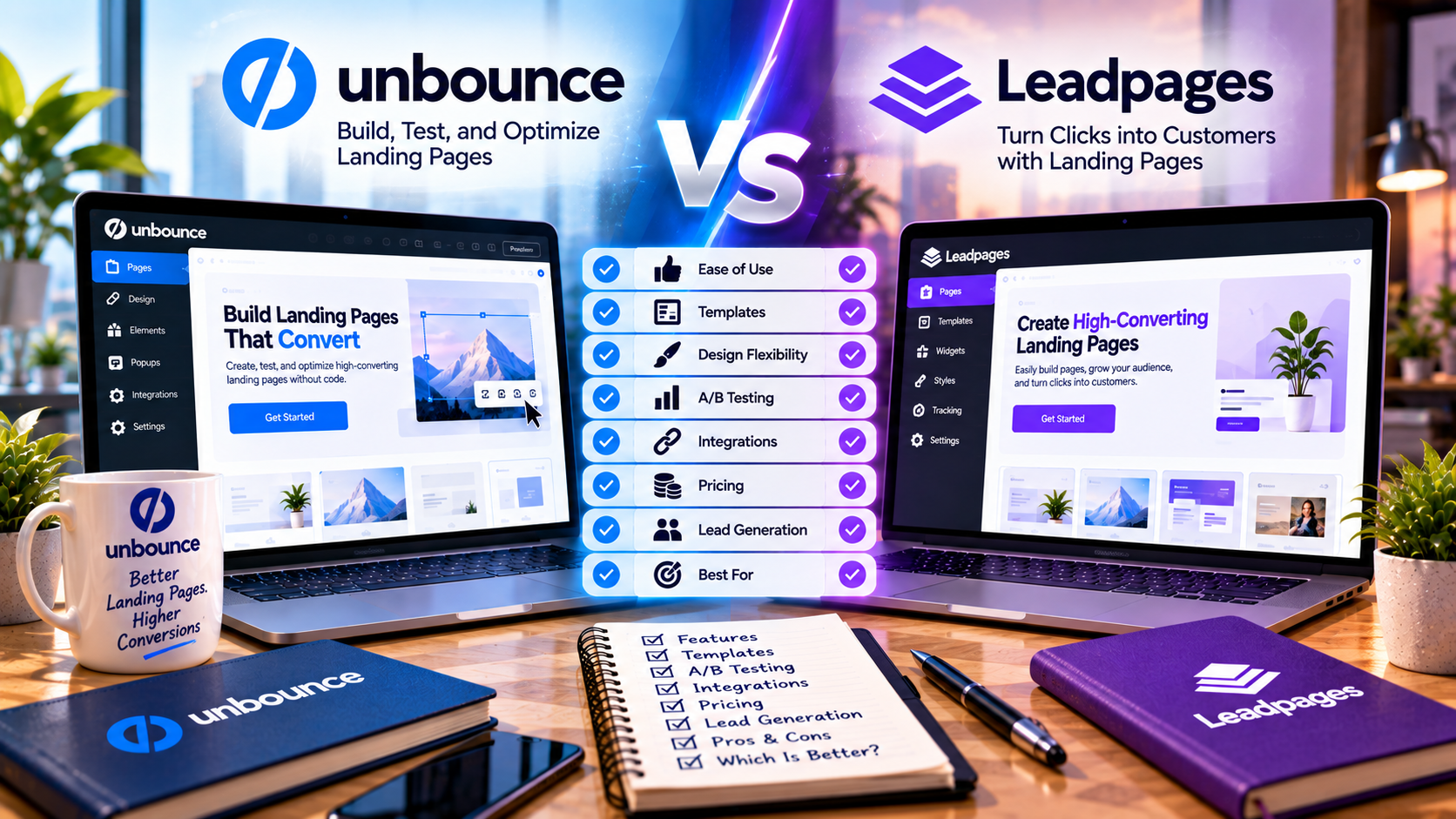
Unbounce Overview
Unbounce is a conversion optimization platform built primarily for marketers, agencies, and businesses focused on maximizing conversion rates.
Its key strengths include:
- Drag-and-drop landing page builder
- AI-powered Smart Traffic
- Dynamic Text Replacement
- Built-in A/B testing
- Popups and Sticky Bars
- Advanced integrations
- Conversion-focused templates
Rather than simply helping users build pages, Unbounce focuses on continuously improving conversion performance.
Leadpages Overview
Leadpages is an easy-to-use landing page and website builder aimed at entrepreneurs, creators, consultants, and small businesses.
Core features include:
- Landing page builder
- Website builder
- Lead capture forms
- Popups
- Alert bars
- Conversion templates
- Basic analytics
- Checkout functionality
Leadpages emphasizes simplicity and affordability, making it attractive for users with limited technical experience.
Feature Comparison
| Feature | Unbounce | Leadpages |
|---|---|---|
| Drag-and-drop Builder | ✅ | ✅ |
| Landing Page Templates | ✅ | ✅ |
| Website Builder | ❌ | ✅ |
| AI Smart Traffic | ✅ | ❌ |
| Dynamic Text Replacement | ✅ | ❌ |
| Built-in A/B Testing | ✅ | Limited/Plan-dependent |
| Popups & Sticky Bars | ✅ | ✅ |
| Lead Forms | ✅ | ✅ |
| CRM Integrations | Extensive | Good |
| Ecommerce Support | Limited | Basic Checkout |
| Mobile Responsive | ✅ | ✅ |
Overall, Unbounce offers more advanced optimization features, while Leadpages provides broader website-building capabilities.
Ease of Use
Both platforms are beginner-friendly, but they appeal to different audiences.
Unbounce
Unbounce offers greater design flexibility and more advanced optimization tools. Although the interface is intuitive, new users may need time to understand features like Smart Traffic, Dynamic Text Replacement, and A/B testing.
Best for:
- Digital marketers
- PPC specialists
- Marketing agencies
- CRO professionals
Leadpages
Leadpages focuses on simplicity. Users can publish pages quickly with minimal learning, making it an excellent option for beginners and small business owners.
Best for:
- Entrepreneurs
- Coaches
- Freelancers
- Small business owners
Winner: Leadpages (for beginners)
Landing Page Customization
Customization is one of the biggest differences.
Unbounce
Provides nearly complete design freedom.
Users can:
- Position elements anywhere
- Build custom layouts
- Create campaign-specific pages
- Optimize for conversions
Leadpages
Uses a more structured editing system.
While this simplifies design, it offers less flexibility for highly customized pages.
Winner: Unbounce
AI and Conversion Optimization
This is where Unbounce clearly stands out.
Smart Traffic
Uses artificial intelligence to automatically direct visitors to the page variation most likely to convert.
Dynamic Text Replacement
Automatically matches landing page headlines with Google Ads keywords.
Built-in A/B Testing
Allows marketers to continuously optimize campaigns.
Leadpages lacks comparable AI-powered optimization features.
Winner: Unbounce
Marketing Integrations
Both platforms integrate with popular marketing tools.
Common integrations include:
- HubSpot
- Salesforce
- Mailchimp
- ActiveCampaign
- Zapier
- Google Analytics
However, Unbounce generally offers deeper support for advanced marketing workflows.
Winner: Unbounce
Templates
Both platforms provide professionally designed templates.
Unbounce
Offers templates optimized for:
- SaaS
- Ecommerce
- PPC campaigns
- Lead generation
- Agencies
- Webinar registration
Leadpages
Provides templates for:
- Local businesses
- Coaches
- Consultants
- Small businesses
- Online courses
Winner: Tie
Pricing Comparison
Pricing changes over time, but generally:
Unbounce
- Higher monthly cost
- Premium conversion optimization tools
- Designed for growing businesses
Leadpages
- Lower entry-level pricing
- Better suited for smaller budgets
- Strong value for entrepreneurs
Businesses should always review the latest pricing before making a purchasing decision.
Winner: Leadpages (for affordability)
Pros and Cons
Unbounce
Pros
- Powerful AI optimization
- Excellent A/B testing
- Dynamic Text Replacement
- Highly customizable builder
- Advanced marketing integrations
- Ideal for Google Ads campaigns
Cons
- Higher pricing
- More advanced learning curve
- No full website builder
Leadpages
Pros
- Easy to learn
- Affordable pricing
- Includes website builder
- Good template library
- Built-in checkout features
Cons
- Limited AI capabilities
- Less design flexibility
- Fewer advanced optimization tools
Who Should Choose Unbounce?
Unbounce is ideal for:
- SaaS companies
- Marketing agencies
- Performance marketers
- PPC specialists
- Ecommerce advertisers
- B2B businesses
- Companies focused on CRO
If maximizing conversion rates is your top priority, Unbounce is an excellent investment.
Who Should Choose Leadpages?
Leadpages is best for:
- Entrepreneurs
- Freelancers
- Consultants
- Coaches
- Small businesses
- Content creators
- Budget-conscious startups
If you need an easy-to-use landing page builder with website functionality, Leadpages is a strong option.
Final Verdict
Both Unbounce and Leadpages are excellent landing page builders, but they serve different audiences.
Leadpages excels in affordability, simplicity, and ease of use, making it a great choice for entrepreneurs and small businesses launching their first online campaigns. Its website builder and intuitive interface allow users to get started quickly without technical expertise.
Unbounce, on the other hand, is designed for marketers who prioritize conversion optimization. Features like Smart Traffic, Dynamic Text Replacement, advanced A/B testing, and greater design flexibility make it one of the most powerful platforms for running high-performing marketing campaigns.
If your goal is simply to build attractive landing pages at a lower cost, Leadpages is a solid choice. If your goal is to maximize conversions, improve Google Ads performance, and continuously optimize marketing campaigns, Unbounce offers significantly more value despite its higher price.
Ultimately, the best platform depends on your business goals, marketing strategy, and budget. Companies focused on long-term growth and data-driven optimization will likely benefit more from Unbounce, while beginners and small businesses may find Leadpages provides everything they need to succeed.
Write Your Review
No reviews yet. Be the first to share your experience!